Category: Column

  • Mino Washi Adult Letter Set

    Mino Washi Adult Letter Set

    A letter set that exudes an adult-like sophistication has arrived.

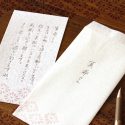
     It features the serene and mature ambiance of Mino Washi paper. This series uses the traditional technique of “rakusui-shi,” where water patterns are applied to freshly made washi paper by showering it with water. The characteristic feature is the translucent appearance of the patterns. This letter series is adorned with patterns of subdued colors, considered auspicious, printed on the bottom surface, combining cuteness with an adult-like atmosphere. It’s a versatile letter set suitable for formal occasions and casual correspondence with friends alike. The paper comes in pure white and cream colors, with stationery, envelopes, and single sheets available. Please use them according to the occasion.

    There are a total of six auspicious patterns, popular among both men and women. The charming and beloved “nanahou” pattern… symbolizing harmony in the home and prosperity for descendants. The refreshing “aouminami” pattern… symbolizing eternal prosperity. The universally appealing “asanoha” pattern… symbolizing growth and warding off evil. The serene and charming “kikubishi” pattern… symbolizing eternal youth, longevity, warding off evil spirits, prosperity for descendants, and good health. Recommended for men, the youthful “wakamatsubishi” pattern… symbolizing longevity, prosperity for descendants, and good health. The stylish “kikkou” pattern… symbolizing longevity.

    Adding a brief note on a letterhead, along with gifts or money, can convey your feelings to the recipient. It’s not only suitable for letters but also recommended for messages on work documents. Since the patterns are considered auspicious, they are perfect for writing congratulatory letters. Additionally, it’s recommended for men to use and to send to superiors.

    These letter sets can be used with fountain pens, brush pens, or traditional brushes.

    If you would like to view all of our products, please click here.

  • Method for Stiffening a Brush with Glue

    Method for Stiffening a Brush with Glue

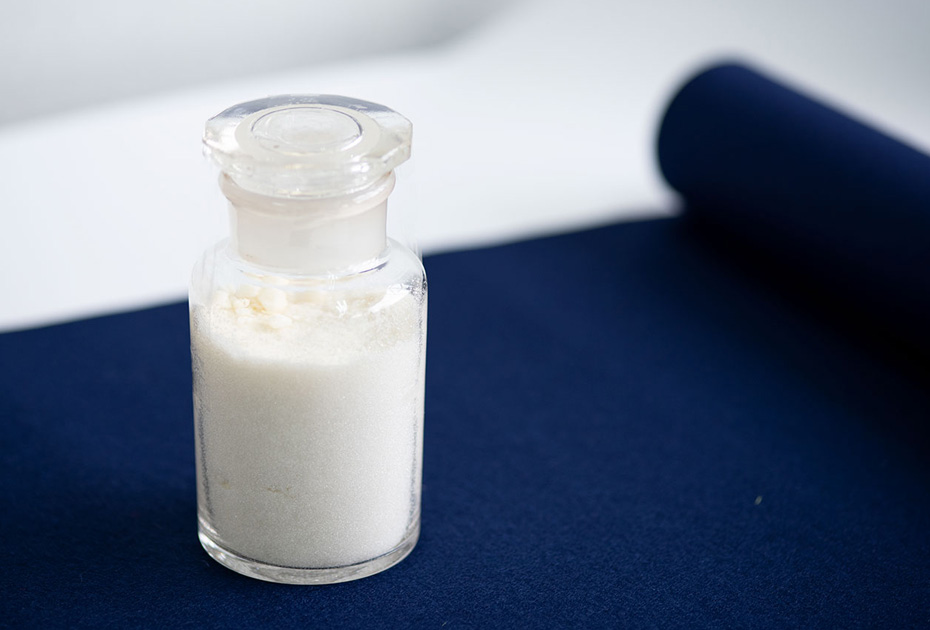
    One method involves stiffening a frayed brush with specialized glue.

    Taking care of and storing brushes is an essential task. While various methods exist for stiffening brushes after use without washing the base, using “specialized glue” as professionals do can restore the brush closer to its original condition.

    Why Specialized Glue for Stiffening Brushes is Recommended by Experts

    The advantage of this specialized glue is that it does not damage the brush. Using resin-based ink or similar substances to stiffen brushes can lead to damage, but using this “specialized glue” can preserve the bristles and extend the brush’s lifespan. Another point is the protection it offers for long-term storage of brushes. It can prevent issues such as insect damage and bristle splitting, even for large brushes stored for extended periods. Now, let’s introduce how to use it.

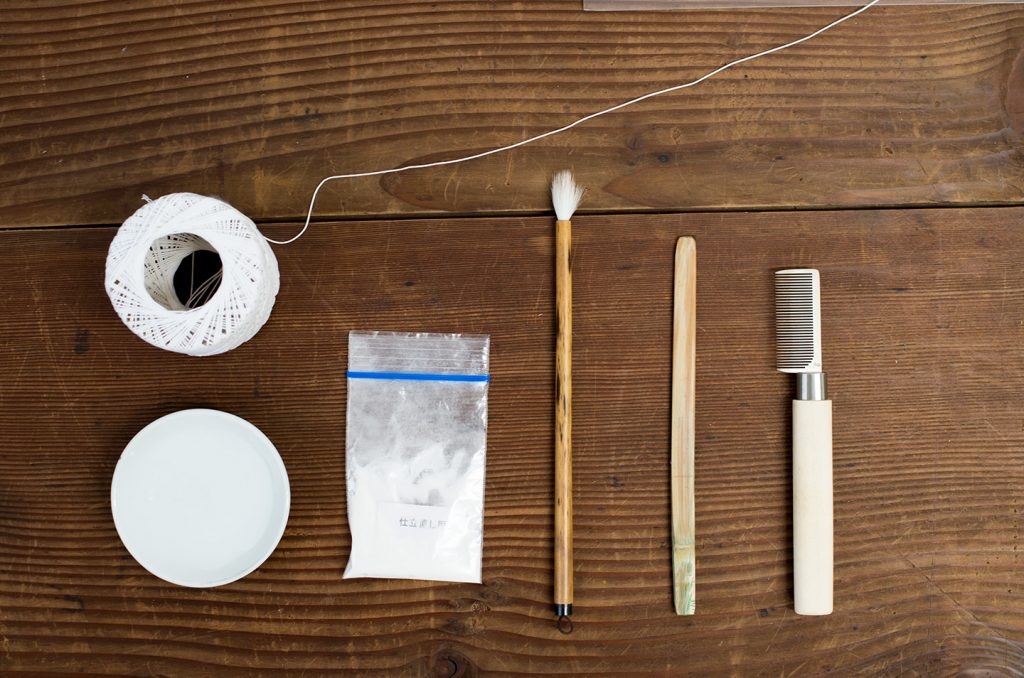
    ■準Items to Prepare

    Specialized glue

    ・Water

    ・A flat board for mixing the glue

    ・A spatula

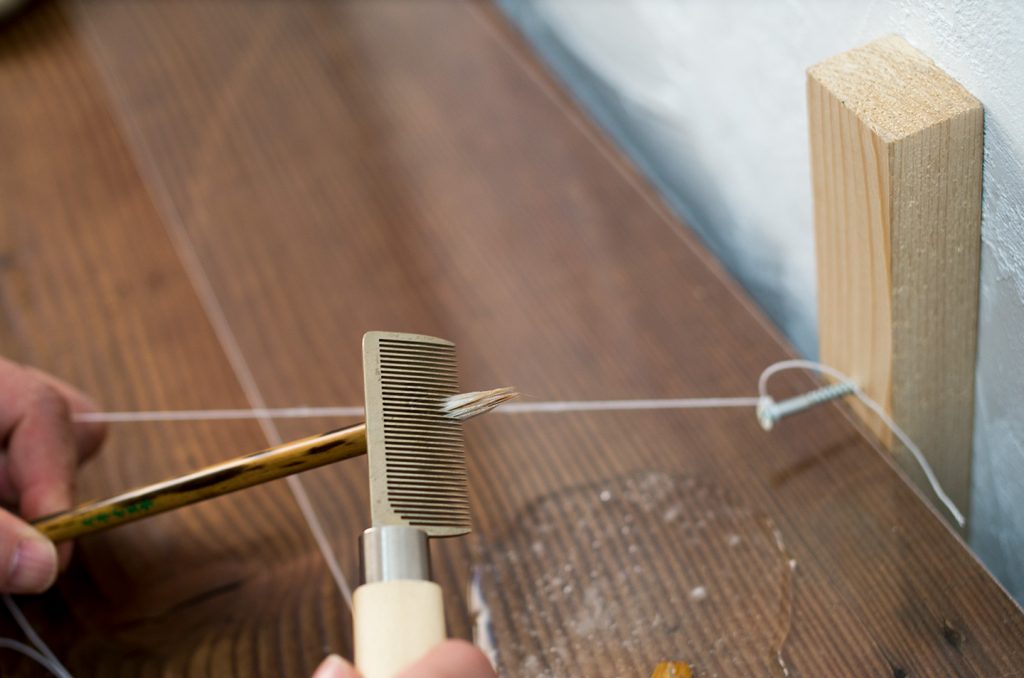
    ・A brush comb

    ・String (one end of the string should be fixed to a wall or stand)

    *Please ensure that the brush to be stiffened is thoroughly washed and free from ink.


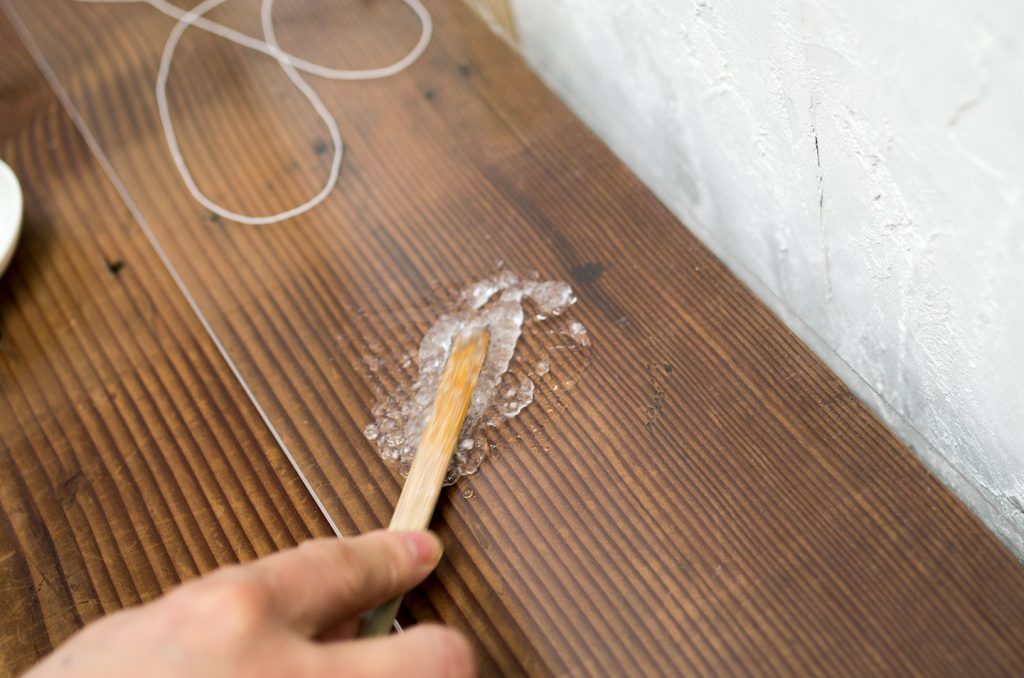
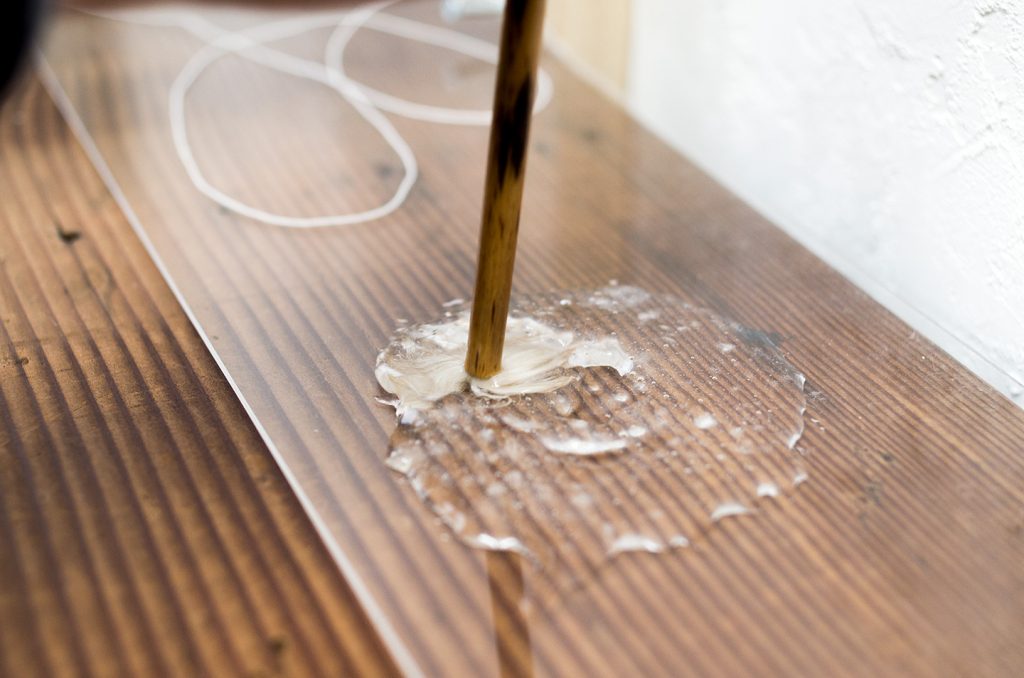
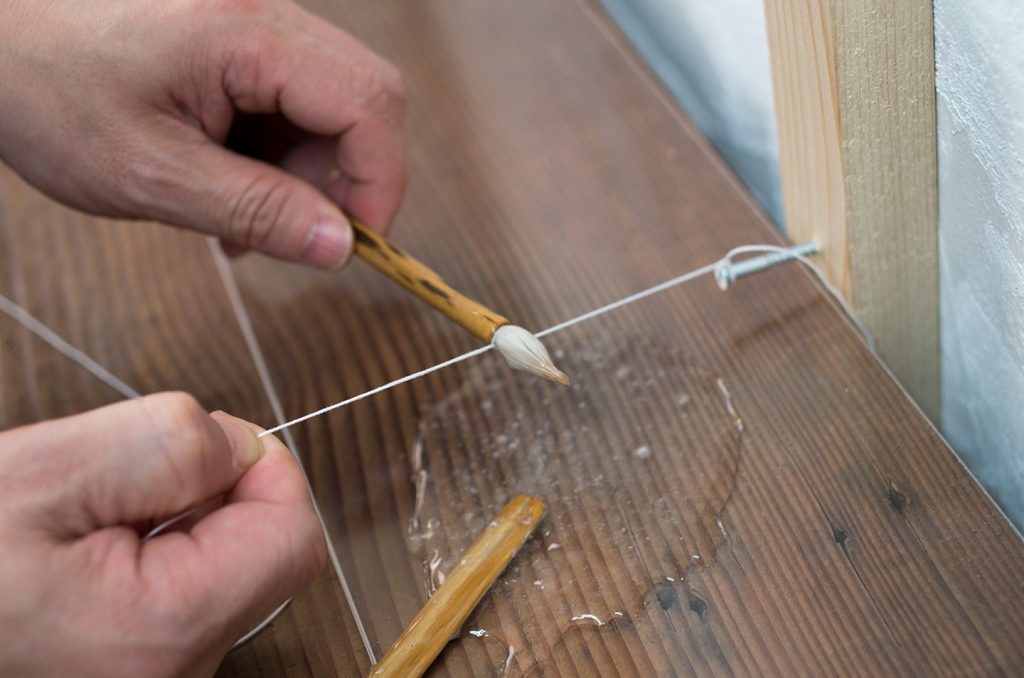
    1.Place about a spoonful of glue on a flat surface, such as a glass plate. This amount should suffice for about ten small brushes. Add water in appropriate amounts until the glue becomes pasty, mixing as you go. It’s necessary to press down as you mix, so ensure you’re working on a flat surface.

    2.Rotate the brush to open up the bristles and spread the glue throughout the entire brush, making sure the glue penetrates the center part of the brush thoroughly.

    3.Remove any excess glue with a spatula, comb the bristles to arrange them neatly, and press down any stray hairs.

    4.Use string to wring out any extra glue. Wrap the string once from the bottom up around the base of the brush tip. Hold the end of the string lightly with your right hand. Pulling the string too tightly will prevent the brush from rotating smoothly. While holding the brush between your thumb and index finger, rotate it in the counter-clockwise direction to wring out the excess glue. (Make sure the string stays straight towards you, and try to keep the brush handle as parallel to the string as possible for best results.)

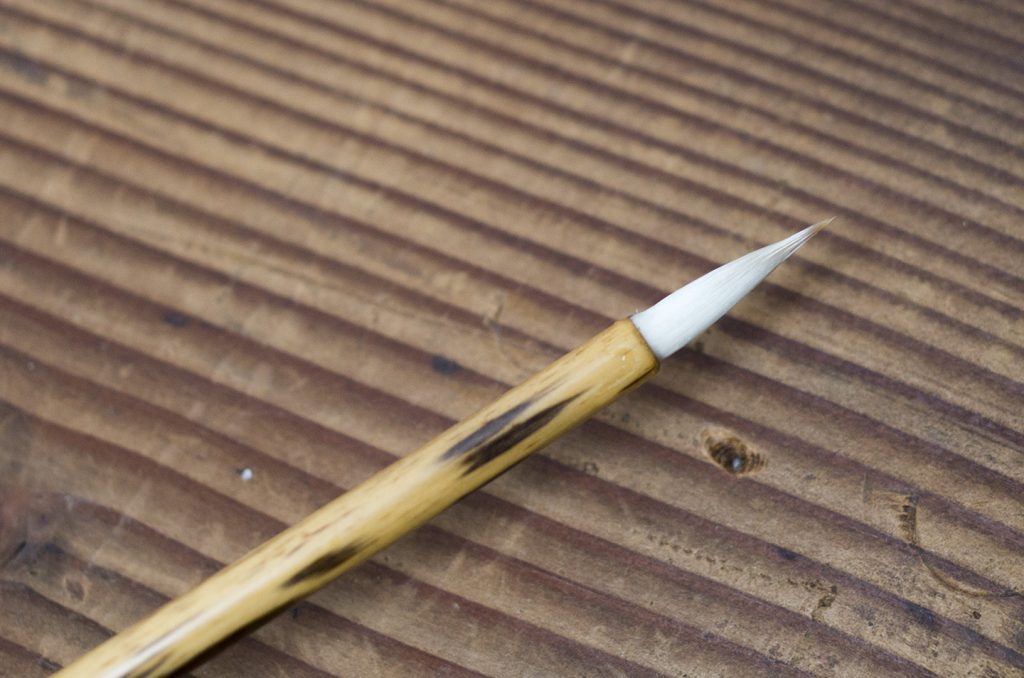
    5.Rotate the brush in a clockwise direction, and straighten any twists or bends with your fingertips. Be careful not to pinch too hard, or the bristles will not form a fine point. Dry the brush away from direct sunlight. A large brush may take about four days to dry, while a small brush may take about three days.

    The step involving wringing out the glue with string may be a bit challenging, but once you get the hang of it, you can easily maintain your brushes at home. Please give it a try.

  • Let’s Try Sutra Copying! Places to Experience Sutra Copying in Tokyo, Kyoto, and Nara.

    Let’s Try Sutra Copying! Places to Experience Sutra Copying in Tokyo, Kyoto, and Nara.

    First, we recommend joining a sutra copying experience casually.

    There are many temples where you can experience sutra copying. It’s a great way to spend some leisurely time in between sightseeing.

    Cafes for Sutra Copying Besides Temples

    Recently, it seems that there are “temple” cafes where you can also experience sutra copying. On your days off, you can easily try sutra copying at a nearby cafe.

    Sutra Copying in Kyoto

    We will introduce places for sutra copying in Kyoto, a city filled with tourist attractions. (Information as of January 2017)

    Sanzenin Temple in Oohara, Kyoto

    Sanzenin is a Tendai sect temple located in Ohara, Sakyo Ward, Kyoto. It is also called Sanzenin Monzeki. The mountain’s name is Gyo-zan, and its main deity is the Medicine Buddha (Yakushi Nyorai) with founder Saicho. It is located in Ohara, a place once known as a retreat for nobles and Buddhist practitioners. Along with Shorenin Temple and Myohoin Temple, it is one of the three head temples of the Tendai sect.

    source:Wikipedia

    ■Address 
    540 Raigoin-cho, Ohara, Sakyo-ku, Kyoto City
    ■Opening Hours
    March to October, 9 AM to 5 PM (Gate closes at 5:30 PM);
    November, 8:30 AM to 5 PM (Gate closes at 5:30 PM);
    December to February, 9 AM to 4 PM (Gate closes at 4:30 PM)
    ■Admission Fee
    Adults 700 yen (600 yen for groups of 30 or more),
    Junior High School Students 400 yen (300 yen for groups of 30 or more),
    Elementary School Students 150 yen
    ■Sutra Copying Fee 1,000 yen
    Website
    http://www.sanzenin.or.jp/

    Daikaku-ji Temple, Former Saga Imperial Palace

    Daikaku-ji is a Shingon Buddhist temple located in Saga, Ukyo Ward, Kyoto. It is the head temple of the Shingon Risshu sect. The mountain name is Sagasan. The main deity is Mahavairocana, and the founder was Emperor Saga. It was once an imperial villa and later became a temple. It has a deep connection to Japanese political history, as it was where Emperor Uda conducted his cloistered rule.

    source:Wikipedia

    ■Address
    4 Saga-osawachou, Ukyo Ward, Kyoto, Kyoto Prefecture
    ■Opening Hours
    9 AM to 5 PM (Reception closes at 4:30 PM)
    ■Admission Fee
    Adults: 500 yen Elementary and Middle School Students: 300 yen
    ■Sutra Copying Fee
    Sutra Copying Offering: 1,000 yen Gyati (a shorter sutra) Copying Offering: 500 yen Copying the Sutras of Buddha Offering: 1,000 yen (in addition to the admission fee)
    Website
    https://www.daikakuji.or.jp/

    Tenryu-ji Temple

    Tenryu-ji (天龍寺), located in Susukinobabacho, Saga Tenryu-ji, Ukyo Ward, Kyoto, Kyoto Prefecture, is the head temple of the Rinzai Zen Tenryu-ji branch. The mountain’s name is Reigisan (霊亀山). The temple’s full name is Reigisan Tenryu Shiseizen-ji (霊亀山天龍資聖禅寺). Its principal deity is Shakyamuni Buddha, and it was founded by Ashikaga Takauji. The founding monk was Muso Soseki. Tenryu-ji is considered the foremost of the Kyoto Gozan temples and holds a significant place as a Zen temple connected to the Ashikaga shogunate and Emperor Kammu. It is registered as a UNESCO World Heritage Site as a cultural asset of ancient Kyoto.

    source:Wikipedia

    ■Address
    68 Susukinobabacho, Tenryu-ji, Saga, Ukyo Ward, Kyoto City, Kyoto Prefecture
    ■Opening Hours
    From 8:30 AM to 5:30 PM (Gate closes at 5:30 PM)
    *From October 21st to March 20th, the gate closes at 5:00 PM.
    ■Admission Fee

    Garden (Sogen Pond and Hyakka-en): High School Students and Above: 500 yen Elementary and Middle School Students: 300 yen Preschool Children: Free

    Hall Visits (Daikodo, Shoin, and Tahoden): Additional 100 yen on the above fees (Note: Some hall visits may be suspended during special events.)

    ■Sutra Copying Fee
    • 1,000 yen (Additional 600 yen for admission is required separately) *Sutra copying tools are not required.

    Website
    http://www.tenryuji.com/

    Hojyu-ji Temple

    Hojyu-ji (ほうじゅうじ) is a Buddhist temple of the Tendai sect located in Higashiyama Ward, Kyoto, Japan.

    source:Wikipedia

    ■Address
    655 Sanju-sangendo-mawarichou, Higashiyama Ward, Kyoto City, Kyoto Prefecture
    ■Opening Hours
    From 6:00 AM to 5:00 PM
    ■Admission Fee
    500 yen (Includes an informational brochure) *For those interested, matcha tea and sweets can be provided separately for an additional 500 yen.
    ■Sutra Copying
    1,500 yen (Includes both sutra copying and admission fees)
    Website
    http://www.jrtours.co.jp/kyoto_plan/enjoy/200806.html

    Bishamon Hall – Shorin-ji Temple

    Shorin-ji is a sub-temple of the To-ji Temple known for its blessings of victory and prosperity. The main deity is the “Bishamonten Standing Statue,” a wooden sculpture believed to be the work of the Heian period Buddhist sculptor Jochō, which was discovered inside the ceiling of To-ji Temple during the Edo period.

    ■Address
    15-795 Honmachi, Higashiyama Ward, Kyoto City
    ■Admission Fee
    • Adults: 800 yen (Includes an explanation of temple treasures)
    • Students (Elementary, Middle, High School): 500 yen (Groups of 8 or more)
    ■Sutra Copying Fee
    1,500 yen per person (Includes a 60-minute session with matcha tea and sweets)
    Website
    http://shourin-ji.org/

    Kennin-ji Temple

    Kennin-ji (建仁寺) is considered Kyoto’s oldest Zen temple. It is also renowned for owning numerous artworks and cultural treasures, including Tawaraya Sōtatsu’s “Wind and Thunder Gods” painting.

    source:Wikipedia

    ■Address
    5 Komatsu-cho, Higashiyama-ku, Kyoto City
    ■Admission Fee
    Adults 500 yen, Elementary and Middle School Students 500 yen
    ■Opening Hours
    10:00 AM to 4:30 PM (March 1 to October 31), 10:00 AM to 4:00 PM (November 1 to February 28), Closed from December 28 to December 31
    ■Sutra Copying Fee
    1,000 yen for a 45-minute session Website: Kennin-ji Temple
    Website
    http://www.kenninji.jp/index.php#/

    Sutra Copying Experience in Nara

    Here are some temples in Nara where you can experience sutra copying. Why not try sutra copying while visiting the World Heritage Sites in Nara?

    Todai-ji Temple

    Todai-ji Temple is a head temple of the Kegon sect and is famous for the “Great Buddha of Nara” (Rushanabutsu) as its principal deity.

    source:Wikipedia

    ■Address
    406-1 Zoshicho, Nara City, Nara Prefecture
    ■Admission Fee
    Adults and High School Students: 500 yen, Elementary School Students: 300 yen
    ■Sutra Copying Fee
    1,500 yen per person
    ■Reservation
    Contact the Todai-ji Temple Sutra Copying Office at 0742-22-5511 with your preferred date and time.
    Website
    http://www.todaiji.or.jp/contents/sutra/

    Yakushiji Temple

    Yakushiji Temple is the head temple of the Hosso sect and has been a UNESCO World Heritage Site since 1998.

    source:Wikipedia

    ■Address
    457 Nishinokyocho, Nara, Nara Prefecture
    ■Admission Fees (Excluding when Genjo Sanzo-in is closed)
    • Adults: 800 yen
    • Middle and High School Students: 500 yen
    • Elementary School Students: 200 yen
    ■Sutra Copying Reception Hours   
    • From 8:30 AM to 5:00 PM as needed
    ■Sutra Copying Fee
    • 2,000 yen per person (for the Heart Sutra)
    Website
    http://www.nara-yakushiji.com/

    Taima-dera

    Taima-dera Temple, located in Katsuragi City, Nara Prefecture, is a temple dating back to the 7th century. It is known for its faith in the “Taima Mandala,” which depicts the Western Pure Land, and the legend of Princess Nakatsuhime associated with the mandala.

    source:Wikipedia

    ■Address
    Taima 1263, Nakano-bo, Katsuragi City, Nara Prefecture
    ■Admission Fee (for entry to Nakano-bo)
    Adults: 500 yen Children: 250 yen
    ■Visiting Hours
    9:00 AM to 5:00 PM
    ■Sutra Copying Reception Hours
       From 9:00 AM to 3:30 PM (ongoing)
    ■Sutra Copying Fee
    2,000 yen per person (subsequent visits may have different fees)
    Website
    http://www.taimadera.org/index.html/

    Sutra Copying Experience in Tokyo and Kamakura

    We’re introducing some temples in Tokyo and “temple cafes” where you can relax and enjoy your time.

    Naritasan Tokyo Betsuin Fukagawa Fudodo

    This temple belongs to the Shingon sect, Chisan school, and is located just a 3-minute walk from Monzen-Nakacho Station on the Tozai and Oedo subway lines. It’s well-known as Fukagawa Fudodo.

    source::Wikipedia

    ■Address
    1-17 Tomioka, Koto-ku, Tokyo
    ■Admission Fee
    ■Sutra Copying Reception Hours
    Daily from 9 AM to 2 PM (ongoing)
    ■Sutra Copying Reception Hours
     Daily from 9 AM to 2 PM (ongoing)
    ■Sutra Copying Fee
    Starts from 2,000 yen per person
    Website
    http://fukagawafudou.gr.jp/

    Yakushiji Tokyo Betsuin

    Yakushiji Tokyo Betsuin is a branch temple of Nara’s Yakushiji Temple, located on a quiet hill in Ikedayama, just a few minutes’ walk from JR Gotanda Station.

    ■Address
    5-15-17 Higashi-Gotanda
    ■Admission Fee
    Free
    ■Sutra Copying Reception Hours
    9 AM to 5 PM (ongoing)
    ■Sutra Copying Fee
    2,000 yen per person (Heart Sutra)
    Website
    http://www.yakushiji.or.jp/about/

    Temple Cafe in Daikanyama – Shingyo-ji

    Just a 2-minute walk from Daikanyama Station, this café is operated by the Jodo Shinshu Hongwanji-ha sect’s “Shingyo-ji” temple.

    ■Address
    1-33-15 EN Daikanyama Building 1F, Ebisu Nishi, Shibuya-ku, Tokyo
    ■Business Hours
    11:00 AM to 10:00 PM (Last order at 9:00 PM) Closed at the end of the year
    ■Sutra Copying Fee
    ¥1,500 per person
    Website
    http://tera-cafe.com/syakyo/index.html/

    Kamakura Otela Cafe

    “Kamakura Otela Cafe” is operated by Joreiji, a venerable Jodo Shinshu Buddhist temple with a rich history dating back to the Kamakura period, located in Yokosuka City.

    ■Address
    2F Ooji Building, 2-12-35 Komachi, Kamakura, Kanagawa Prefecture
    ■Business Hours
    11:00 AM to 7:00 PM Open every day (with occasional temporary closures)
    ■Sutra Copying Fee
    Petit Sutra Copying Set: ¥1,000 per person
    Website
    http://www.oteracafe.jp/oteramenu/index.html#petit/
  • Introduction to Calligraphy Sets for Adults Starting Now

    Introduction to Calligraphy Sets for Adults Starting Now

    Recommended Calligraphy Sets for Adults

    January is a month filled with anticipation for new beginnings. It’s a time when many people are thinking about what new activities they want to pursue in the coming year. Perhaps this year, you’re considering starting calligraphy, trying your hand at penmanship, or writing beautiful letters with elegant characters. Calligraphy offers the opportunity to explore new creative ventures, and there are plenty of individuals looking to embark on this journey. If you’re one of them, we encourage you to consult with us at Shoyudo! Our online staff can introduce you to recommended products that will provide everything you need to start your calligraphy journey.

    Brushes

    One recommended brush for beginners is the “Unshu Chugokugo” brush. It’s a versatile brush that’s easy to handle for newcomers to calligraphy. With its balanced blend of firmness and softness, it’s well-suited for writing on traditional Japanese paper (hanshi) and can handle characters of various sizes, from two to six characters. So, whether you’re starting calligraphy for the first time or rediscovering your passion for it, we’re here to assist you in finding the right tools and materials to make your calligraphy experience a rewarding one.

    Ink

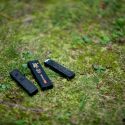
    “Japanese-Made 5-Star Safflower Ink 1.5 Sticks” This ink is made using extremely fine soot particles, making it suitable not only for calligraphy but also for sutra transcription! It’s a handy tool to have in your collection.

    Inkstone

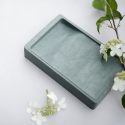
    “Kakujo Shihira” This inkstone is produced in Ogatsu, one of Japan’s leading inkstone manufacturing regions. Its smooth texture and craftsmanship make it a perfect inkstone for adult calligraphy, slightly different from what you might have used as a student. We also recommend the standard size, Shigohei (available for 1,875 yen).

    Felt Underlay for Hanshi Paper

    The felt underlay adds a sense of luxury and volume. If you apply strong brush pressure, we recommend the larger size. This felt underlay is designed for Hanshi paper and has a thickness of 2mm.

    Paperweight for Bunchin Nickel Silver (Medium)

    For four-character compositions on Hanshi paper, we recommend the medium-sized paperweight.

    Brush Stand

    Other Items You Might Find Useful “Angilas Brush Stand – Medium” This brush stand is made of Mino-yaki ceramics. It exudes an air of sophistication and sets the mood for a focused and tense atmosphere. It’s just the right size to accommodate both large and small brushes.

    Water Dropper

    “Water Dropper – Small Plum Blossom Design” Water droppers are used to add water while grinding ink.

    Why not start with an adorable and affordable option? If you find calligraphy challenging to start on your own, consider looking for a nearby class where you can observe brush techniques and more. For those interested, Shoyudo has classes available in our Osaka and Kyoto stores that you can join starting from a single session. If you have any questions, please feel free to inquire.


  • I Want to Try It – About Premium Wool Brushes

    I Want to Try It – About Premium Wool Brushes

    What is a Premium Wool Brush?

    A wool brush, also known as a “羊毛筆” (yōmō fude) in Japanese, is a brush made entirely from goat hair. It is characterized by its soft bristles, good elasticity, and excellent ink absorption. Premium wool brushes are crafted using select goat hairs from within the goat’s coat. These brushes allow for creating gentle and nuanced calligraphy. When used with a short tip, they produce warm and full-bodied strokes, while with a long tip, they can create refined and elegant lines. Wool brushes are exceptionally soft, requiring skill to wield effectively. However, they offer an outstanding writing experience, making them recommended for those who wish to explore new calligraphy styles.

    ~Renowned Calligraphers and Wool Brushes~

    Wool brushes have been favored by many accomplished calligraphers. Figures like Ueda Sōkyū (上田桑鳩) and Teshima Yūkei (手島右卿) are known for their dedication, even creating their own original wool brushes. Wool brushes are essential for expressing the moment when the ink is applied to paper, showing the gradual spread of ink and the appearance of texture. Writing with a wool brush also demands an awareness of the brush’s core and the balance of characters, making it a valuable tool for learning calligraphy, be it for kanji or kana. We recommend trying various types of wool brushes if you aspire to delve deeply into the art of calligraphy.

    ~Price Comparison with Other Brands~

    At Shoyu Online, our wool brushes are offered at a lower price while maintaining high quality. This is achieved through our manufacturer’s unique sourcing of raw materials and production processes. When properly maintained through regular cleaning and other forms of maintenance, wool brushes are said to be lifelong tools. As you use them, the bristle tips gradually turn golden, enhancing their usability. We encourage you to give them a try.

    Exceptional Writing Experience! A Must-Try Favorite –
    「Shuhitudo  Saidonkouhou (秀筆堂 細嫩光鋒)」

    What is the Premium Wool Brush「Saidon kouhou」? The cost of wool brushes can vary depending on the part of the goat’s body from which the hairs are obtained. “Saidon kouhou” brushes come from the beard of young male goats raised in very limited regions downstream of the Yangtze River in China. These brushes are exceptionally expensive because only a tiny amount can be collected from each goat. At Shuhitudo, we meticulously select hairs that are both fine at the tip and have good springiness, with slightly transparent ends, to create our brushes.


    View the  Shuhitudo Saidon kouhou (秀筆堂 細嫩光鋒)  Collection Here: >>Shuhitudo Premium Wool Brush

    asy to Manage and Write Neatly – The Popular
    「Sakisuki Wool Brush Mujin (先梳羊毛筆 無尽)」

    What is the Sakisuki Wool Brushi? The cost of wool brushes can vary depending on the part of the goat’s body from which the hairs are obtained. “Saidon kouhou” brushes come from the beard of young male goats raised in very limited regions downstream of the Yangtze River in China. These brushes are exceptionally expensive because only a tiny amount can be collected from each goat. At Shuhitudo, we meticulously select hairs that are both fine at the tip and have good springiness, with slightly transparent ends, to create our brushes.

    View the  Sakisuki Wool Brushi Mujin (先梳羊毛筆 無尽) Collection Here: >>Suhitudo Premium Wool Brush

  • Proper Storage and “Laying” of Calligraphy Paper

    Proper Storage and “Laying” of Calligraphy Paper

    Calligraphy paper plays a crucial role among the Four Treasures of the Study. It offers a wide range of textures and appearances depending on its thickness and production method. To preserve the quality of calligraphy paper and make the most of it for creating art, it’s important to follow proper storage practices.

    What is the correct way to store calligraphy paper?

    When it comes to the storage of calligraphy paper, it’s essential to be particularly cautious about direct sunlight and humidity.

    Recommended Storage Location

    Choose a place where direct sunlight does not shine, there is good ventilation, and humidity is minimal. Inside a paulownia box or on top of a chest of drawers is often considered suitable.

    Recommended Storage Methods

    Wrapping the calligraphy paper in newspaper or Japanese paper allows the paper to breathe and provides protection against direct sunlight. Placing a wooden lattice (sudoko) under the calligraphy paper for better ventilation and using moisture-absorbing agents or desiccants for humidity control can be effective. Additionally, adding moth repellent (such as mothballs for clothing) can help prevent insect damage. Be cautious about sealing the paper in materials like vinyl, as it can prevent the paper from breathing and may lead to stains.

    What Does it Mean to “Lay” the Paper?

    There is a saying that paper is generally better when it has aged for a few years rather than being freshly made. The ideal period for aging can vary, with some calligraphers suggesting a period of 10 years. It ultimately depends on the style of the artwork you wish to create and your personal preferences, so feel free to experiment to find the aging period that suits your taste.

    Benefits of Laying the Paper

    Aging paper allows excess moisture to escape and tightens the paper fibers, resulting in several benefits:

    ①Ink permeates the paper adequately, reducing bleeding.
    ②Ink color becomes more beautiful.
    ③Distressed effects (such as fading or wear) appear more attractive.
    ④The brush separates from the paper more smoothly, making it easier to write.

    Paper breathes in humidity and releases it, effectively eliminating gluey residues and moisture. Paper in this dried state is referred to as “aged paper.” Aged paper not only improves ink adhesion and color but also enhances the appearance of effects like bleeding and distress. While aging paper may sometimes lead to slight yellowing or “star” stains, with proper storage, these characteristics can be valued assets.

    It’s important to note that paper containing anti-bleeding agents or dyes (such as decorative paper, processed paper, and machine-made Japanese paper) does not benefit from aging. In fact, these papers can become rigid and prone to breakage during long-term storage.


    Paper Can Catch a “Cold” Too!?

    On the flip side, even if paper is adequately aged, incorrect storage methods can lead to issues like paper appearing white and speckled when ink is applied, a phenomenon akin to “paper catching a cold.” Depending on the aging method, it can even degrade paper quality. Therefore, exercising caution in paper storage is essential.

    In Conclusion

    Calligraphy paper is indispensable for creating artworks. By following proper storage methods, you can significantly enhance the quality of your creations. Experiment with aging your paper using the correct methods to fully appreciate the improved texture and attractive distressing effects.

    Additional Information:

    In recent years, the time between paper production and reaching customers has shortened by several months compared to the past. As a result, the natural drying period for paper has reduced. When paper arrives in your hands, it often hasn’t undergone the same extensive drying period as before, leading to incomplete control over bleeding. Consequently, many papers are treated with “anti-bleeding” agents. Keep in mind that these anti-bleeding effects intensify every few months, so aging paper excessively, as in the past, may transform it into a type of paper that doesn’t absorb ink at all.

    You can find the calligraphy paper introduced by Shoyu Online here.»

  • Sizes of Calligraphy Paper

    Sizes of Calligraphy Paper

    When you think of calligraphy paper, what comes to mind? In fact, there are numerous types and names for calligraphy paper sizes. They are already pre-cut to standard dimensions, so you can choose a paper size that suits your purpose. While the variety might seem confusing, it’s not difficult to select one based on your goals and intended use. We will now provide a clear introduction to calligraphy paper sizes.

    The basic size of calligraphy paper is “Yonshaku Gasen.”

    The most fundamental size in calligraphy paper is “Yonshaku Gasen” (四尺画仙), which has dimensions of approximately 69 × 136 cm. It is also known by other names such as “Zenshi” (全紙), “Shōgasen” (小画仙), and “Yonshaku Mono” (四尺物). Using “Yonshaku Gasen” as the base, it is often cut vertically in half to create the “Hansetsu” (半切) or “Jōfuku” (条幅) size. For works submitted to open exhibitions and contests, there are designated sizes according to each event’s rules. Please be aware that the specified size for these exhibitions refers to the dimensions when framed, so keep this in mind.

    At Shoyu Online, you can choose from various special-sized paper options.

    Representative Paper Sizes

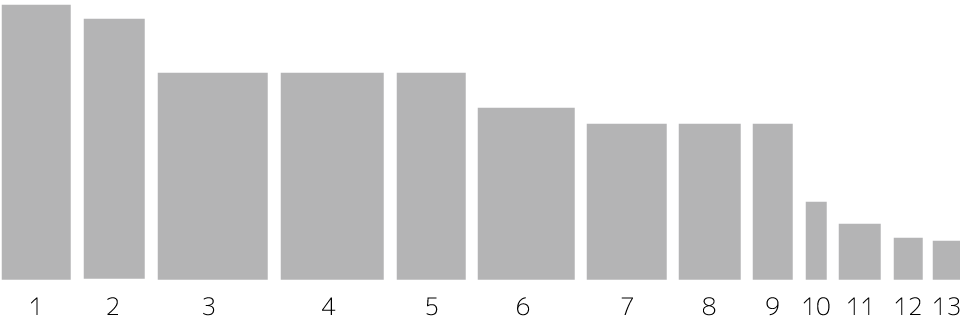
    I have summarized the representative paper sizes and their names in a table from largest to smallest. Please refer to the diagram below for reference.

    No. size Pronunciation cm(width×height) Different Names
    1 2×8尺 2×8 Shaku Approximately60×240cm 2×8(Nihachi)
    2 尺八屏 Shaku happei Approximately53×234cm Chinese Standard Size
          Approximately53×228cm Japanese Standard Size
    3 六尺画仙 Rokushaku gasen Approximately96×180cm 大画仙(Daigasen)
    4 3×6尺 3×6 Shaku Approximately90×180cm 三六(Saburoku)
    5 2×6尺 2×6 Shaku Approximately60×180cm 二六(Niroku)
    6 五尺画仙 Goshaku gasen Approximately84×150cm 中画仙
    7 四尺画仙 Yonshaku gasen Approximately69×136cm 全紙(Zenshi)・小画仙(Shougasen)・四尺物(Yonshakumono)
    8 聯落ち Renochi Approximately53×136cm ―
    9 半切 Hansetu Approximately34.5×136cm ―
    10 八つ切 Yatugiri Approximately17.5×68cm ―
    11 全懐紙 Zenkaishi Approximately36.5×48.5cm ―
    12 半懐紙 Hankaishi Approximately24.5×36.5cm ―
    13 半紙 Hanshi Approximately24.3×33.4cm ―

    Common Paper Sizes and Names

    “Yonshaku Gasen” (四尺画仙)

    Dimensions: Approximately 69 × 136 cm. It is also known by other names such as “Zenshi” (全紙), “Shōgasen” (小画仙), and “Yonshaku Mono” (四尺物).

    “Hansetsu” (半切)

    Dimensions: 34.5 × 136 cm. Hansetsu is created by vertically cutting “Yonshaku Gasen” (Zenshi) in half. Traditionally, it has been the most commonly used size.

    “Renochi” (聯落ち)

    Dimensions: 53 × 136 cm. It is a size obtained by cutting “Zenshi” into 3/4 of its original width. For a paper size of 53 × 228 cm, often used in open exhibitions and sometimes referred to as “Renochi,” it’s important to note that the term “Renochi” has come to refer more to the “width of the paper” due to decreased use of the traditional “true Renochi.” In this context, “Renochi” is roughly equivalent to “53 cm width,” and it’s essential to confirm the length.

    “Shaku happei” (尺八屏)

    This is a Chinese standard size with dimensions of approximately 53 × 234 cm. The Japanese standard size is approximately 53 × 228 cm. There is a difference of about 6 cm in length between the two standards, but both are widely used for open exhibitions.

    “Ni-Hachi” (2×8)

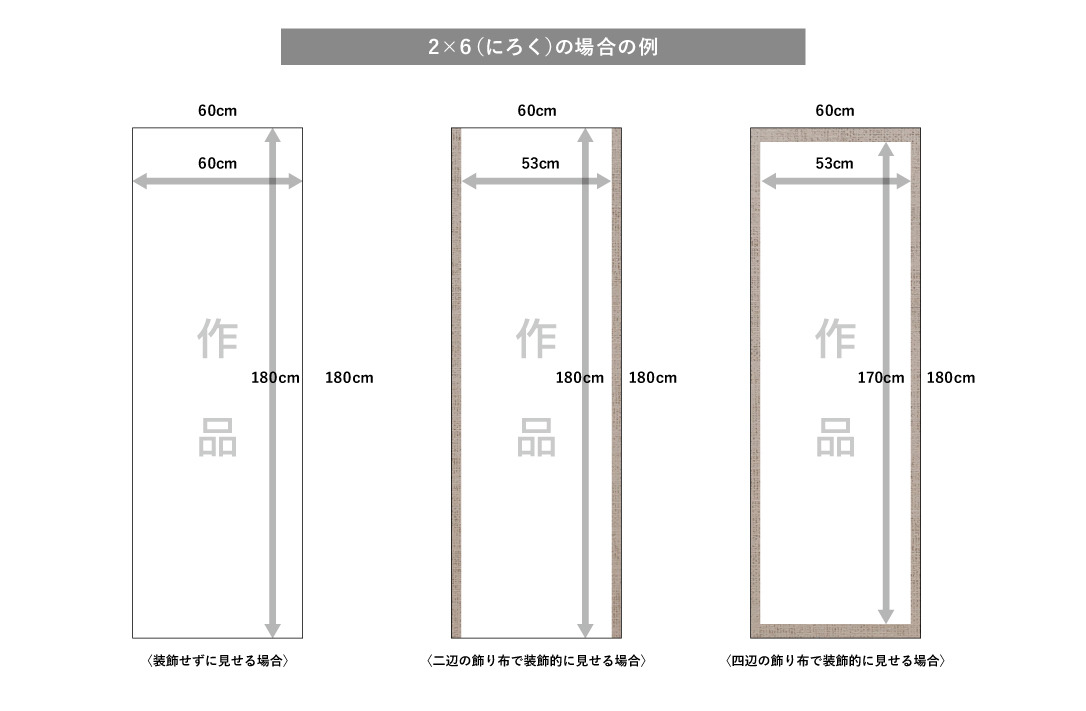
    “Ni-Hachi” typically refers to the frame size used in open exhibitions, which is 2 shaku × 8 shaku, approximately 61 × 242 cm. It’s important to note that the size of open exhibitions refers to the dimensions when framed. If you intend to display your work with a mat showing and use the “Ni-Hachi” frame size, choose a slightly smaller 53 × 228 cm (1.75 shaku × 7.5 shaku) paper. If you plan to fill the frame entirely with your artwork without showing the mat, select a 60 × 240 cm paper.

    “Ni-Roku” (2×6)

    “Ni-Roku” refers to the frame size used in open exhibitions, which is 2 shaku × 6 shaku, approximately 60 × 180 cm. Similar to “Ni-Hachi,” “Ni-Roku” refers to the frame size for open exhibitions. If you intend to display your work with a mat showing and use the “Ni-Roku” frame size, choose a slightly smaller 53 × 170 cm (1.75 shaku × 5.5 shaku) paper. If you plan to fill the frame entirely with your artwork without showing the mat, select a 60 × 180 cm paper.

    You can purchase paper available at Shogu Online here>>

  • Raw Materials and Types of Ink

    Raw Materials and Types of Ink

    Raw Materials of Ink

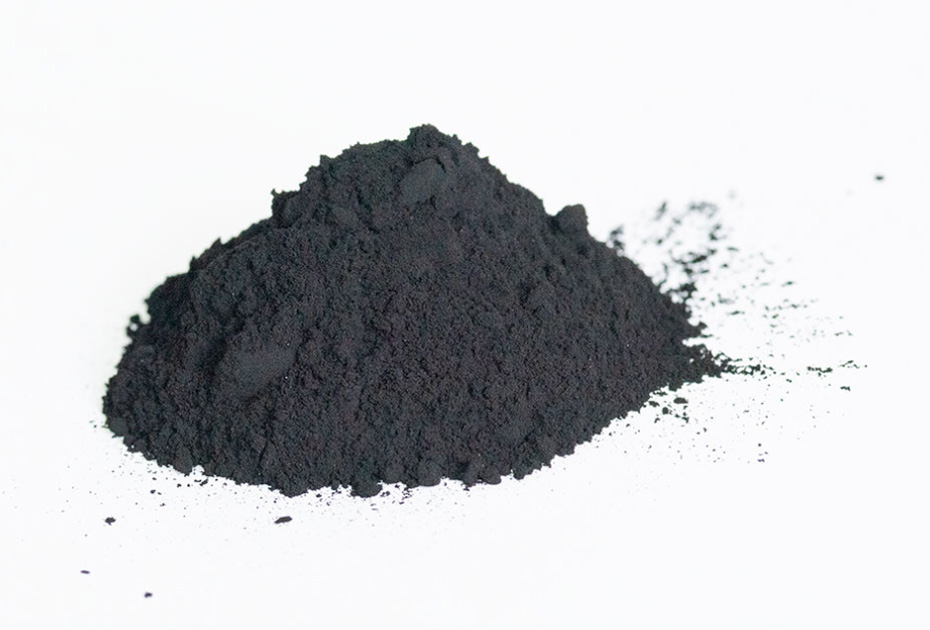
    Ink is made from three main raw materials: “soot” (煤), “nikawa” (膠), and “fragrance.” First, soot and dissolved gelatin are kneaded together, and then fragrance is added. The mixture is then placed into molds and dried to create solid ink.

    About Soot

    There are three types of soot: “oil soot,” “pine soot,” and “modified carbon soot.” The ink made from each type of soot is referred to as “oil soot ink,” “pine soot ink,” and “modified carbon soot ink,” respectively.

    ・Oil Soot: Soot produced by burning plant oils, such as rapeseed oil.

    ・Pine Soot: Soot produced by burning pine branches or bark.

    ・Modified Carbon Soot: Soot produced by burning mineral oil, carbon black, etc.

    煤

    About “nikawa” (膠)

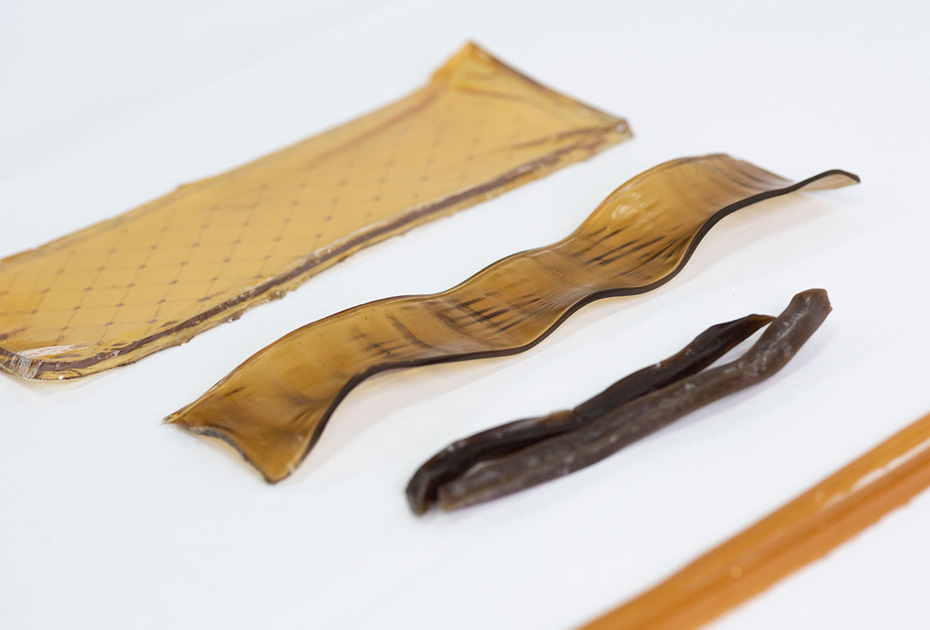
     Nikawa is obtained by boiling and extracting proteins such as collagen from the skin, bones, and sinew (the intermediate tissue between the skin and flesh) of animals like cows, horses, and deer. After extraction, it is dried to form gelatin. When making ink, gelatin is melted in a water bath and used. In the ink production process, gelatin plays a role in solidifying the powdered soot, and in the ground ink, it stabilizes the soot on the paper’s surface.

    膠

    About Fragrance

    Fragrance is used to mask the distinctive odor of gelatin. Additionally, this fragrance has a secondary effect of calming the mind of the ink grinder.

    Dragon’s blood (龍脳) and musk (麝香) are representative fragrances used for this purpose.

    香料

    Types of Ink

    Ink is classified into “Oil Soot Ink,” “Pine Soot Ink,” and “Modified Carbon Soot Ink” based on the type of soot used.

    ■Oil Soot Ink

    To produce oil soot ink, vegetable oils such as rapeseed oil, sesame oil, tung oil, and camellia oil are placed in a clay vessel. A lampwick made of rush grass (いぐさ) is ignited, and the clay vessel is covered to collect the soot deposited inside. The soot in oil soot ink has fine and uniform particles. It is mixed with dissolved gelatin, kneaded together with fragrance, and then placed into molds and dried to create the ink.

    While the art of making ink was introduced to Japan from China, oil soot ink is believed to be a type of ink that Japan developed first. Even today, excellent oil soot ink continues to be produced.

    One of the manufacturers of oil soot ink is “Kobai-en” in Nara, which is the only place in Japan that produces oil soot ink through the traditional method of “collecting soot.”

    Note: The term “modified carbon soot ink” refers to the ink made from the modified carbon soot mentioned earlier in the text.

    Feature Article: “Dedicated to the Art of Ink Making – The Traditional Process at Kobai-en”>>

    ― Characteristics of Oil Soot Ink ―

    In contrast to pine soot ink, oil soot ink exhibits a glossy appearance when ground. In its concentrated form, it appears black, but in its diluted form, it takes on a reddish-brown hue.

    Oil soot ink is nearly free from impurities, and its particles are fine and uniform, making it well-suited for producing ink of normal to concentrated densities. The fine particles result in a smooth texture on the inkstone, and as the quality of the oil soot ink improves, this glossy appearance becomes more pronounced.

    Regarding ink color, the following characteristics are observed: [further details to be provided below].

      High-Quality Oil Soot Ink Poor-Quality Oil Soot Ink
     Concentrated Ink  A glossy and deep lacquer black with a sense of depth. Lacks the deep black luster, exhibiting a reddish or whitish brown ink color.
     Diluted Ink

    A light brown with hints of purple or blue tones. It provides a fine gradation and three-dimensional effect.

    (The color may vary depending on the type of vegetable oil used.)

    Has a coarse texture with no three-dimensional effect.

    ■About Pine Soot Ink

    There are two types of pine soot ink: “Ikimatsu Pine Soot Ink” and “Ochimatsu Pine Soot Ink.” “Ikimatsu Pine Soot Ink” is made from the soot produced by scraping the bark of living pine trees, while “Ochimatsu Pine Soot Ink” is made from the soot produced by burning dried pine wood, which contains more pine resin. To collect the soot for pine soot ink, the part of the pine tree that exudes resin is cut into small pieces, dried, and then burned inside a room. The soot that settles on the walls and ceiling is collected for use. This soot is mixed with dissolved gelatin, kneaded together with fragrance, placed into molds, and dried to create the ink. This manufacturing process is the oldest method of ink production, originating from ancient China and later transmitted to Japan.

    Currently, with oil soot ink becoming the mainstream and the scarcity of high-quality pine, pine soot ink is treated as a precious commodity.

    ― Characteristics of Pine Soot Ink ―

    In contrast to oil soot ink, pine soot ink lacks a glossy appearance when ground and is said to transition from black to blue as it ages. The uneven particles of soot beautifully depict delicate gradations in diluted ink. In concentrated ink, it exhibits a subdued luster, while in diluted ink, it offers a transparent and exquisite hue. Pine soot ink is considered to have excellent effects when used as a background in the calligraphy of ancient brushes and ink paintings.

    ■Modified Carbon Soot Ink

    Modified carbon soot ink, also known as Western ink, is made from materials such as mineral oil and carbon black. It is commonly used in practical ink and affordable products. One of its characteristics is that it “darkens quickly” compared to pine soot ink and oil soot ink. However, it may be said that it lacks the natural charm of ink, which “shines in seven colors.”
    While modified carbon soot ink may be considered inferior to pine soot ink and oil soot ink, using it is recommended for preserving the longevity of brushes and inkstones.


    Popular Oil Soot Ink at Shoyu Online

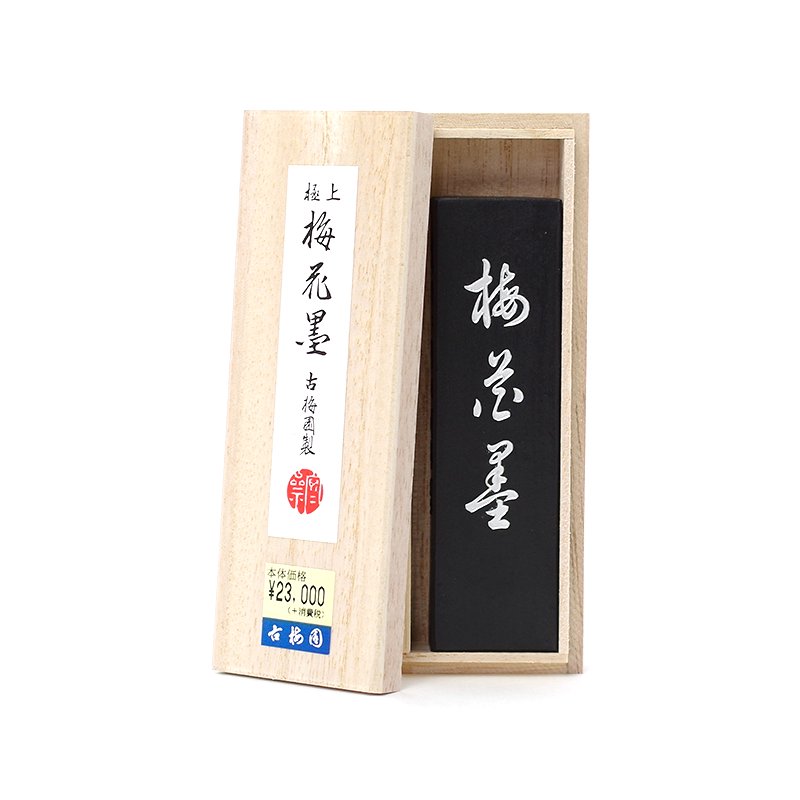
    梅花墨

    1. 梅花墨 大 3.0丁型(古梅園)

    This is the finest oil soot ink made with rapeseed oil, featuring the finest particles. It has a substantial weight and appears pure black in concentrated form, while in diluted form, it contains a hint of light purple. It has excellent flow and is perfect for Chinese characters and kana works.

    View Product Page
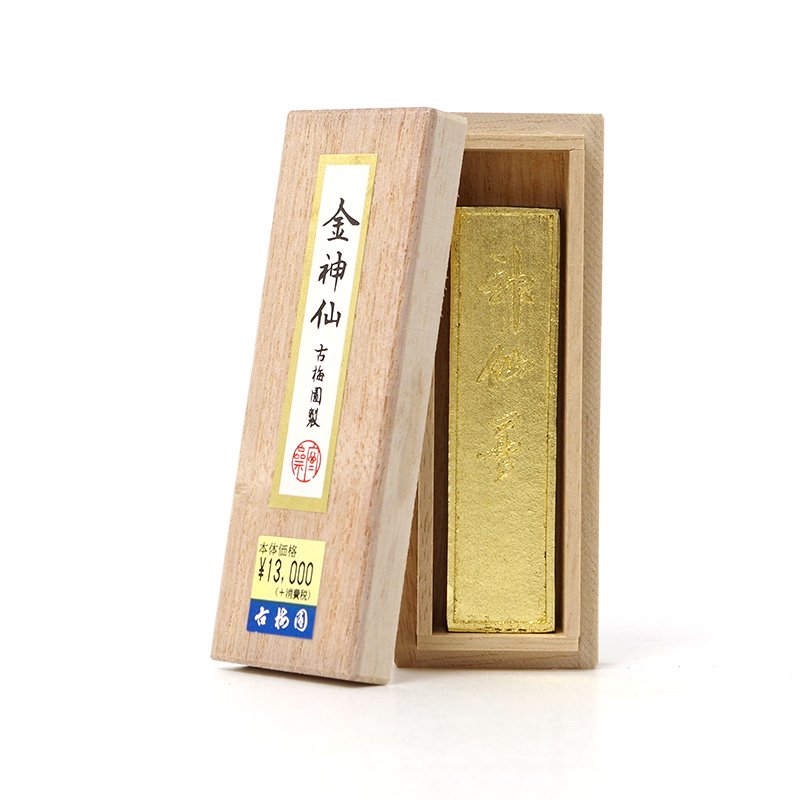
    金神仙

    2. 金神仙 1.5丁型(古梅園)

    This is the finest rapeseed oil soot ink. In its concentrated form, it appears glossy and pure black, while in diluted form, it takes on a black hue with brown tones. It is suitable for Chinese character works, kana calligraphy, and sutra copying.

    View Product Page
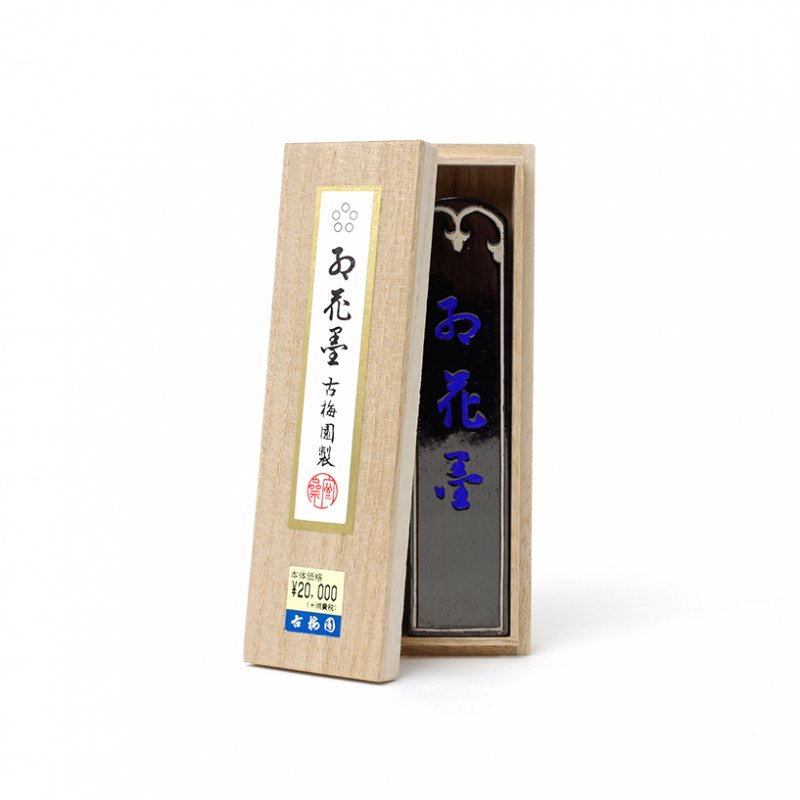
    紅花墨

    3. 五星 紅花墨 5.0丁型(古梅園)

    This is oil soot ink made with rapeseed oil, known for its excellent flow. In its concentrated form, it exhibits a beautiful black color resembling ink, while in diluted form, it appears as a grayish hue.

    View Product Page

    Popular Blue Ink and Pine Soot Ink at Shoyu Online

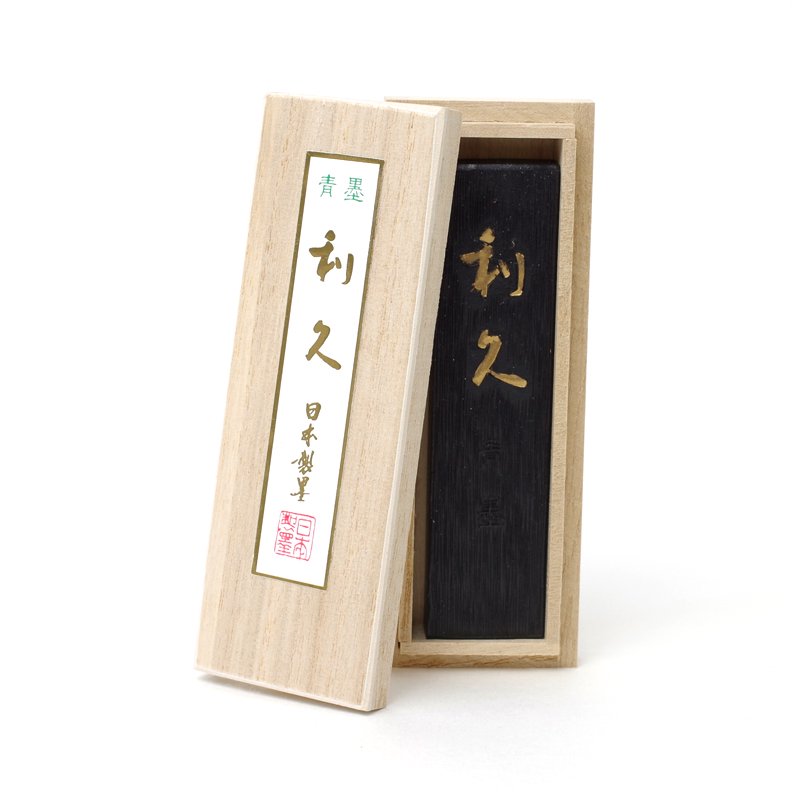
    利久

    1. 利久 1.5丁型(日本製墨)

    This pine soot ink is created by blending vegetable-based indigo with our other ink, resulting in a pine soot ink with a more pronounced blue tint. It is a premium concentrated blue ink that has been carefully adjusted to suit the preferences of calligraphers and artists.

    View Product Page
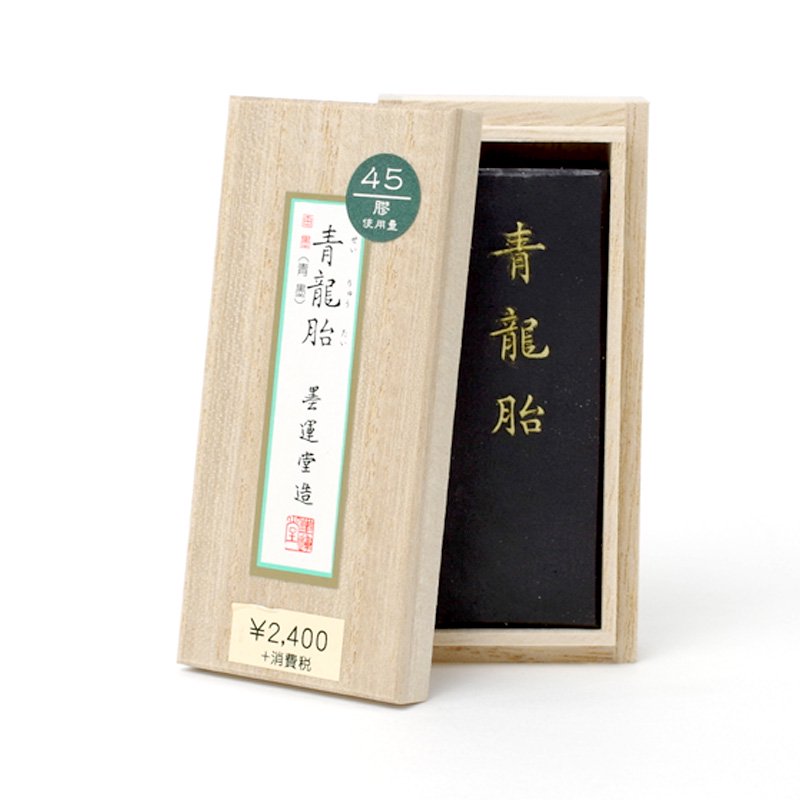
    青龍胎

    2. 青龍胎 1.5丁型(墨運堂)

    It allows for layering without shining, offering the ability to freely express gradations and create artworks with depth and a sense of distance in the ink color. It is recommended for practicing e-tegami (Japanese picture letters) and sumi-e (ink wash painting).

    View Product Page
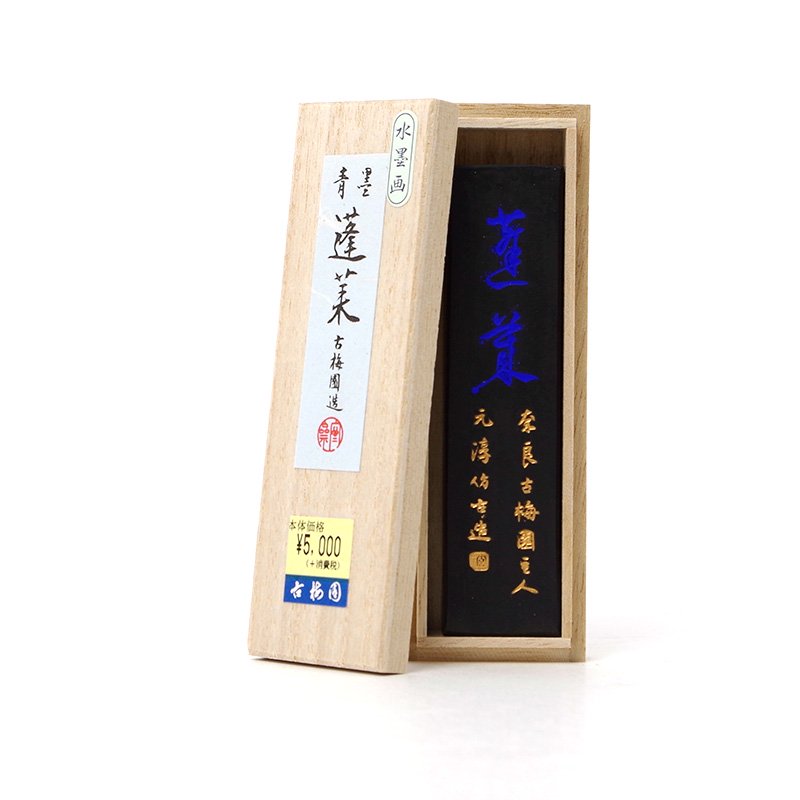
    蓬莱

    3. 蓬莱 2.0丁型(古梅園)

    Oil soot ink, developed through over 400 years of ink making, is used for blue ink and made solely from soot. In diluted form, it leans towards a grayish hue with a touch of blue, evoking a sense of weight and suitable for sumi-e (ink wash painting), haiga (haiku painting), and other art styles. 

    View Product Page

    Summary

    We have introduced the raw materials and types of ink. Ink is made from three main raw materials: “soot” (煤), “Nikawa” (膠), and “fragrance.” It is classified into “Oil Soot Ink,” “Pine Soot Ink,” and “Modified Carbon Soot Ink” based on the type of soot used. Each type of ink has its own characteristics, so please choose according to the artwork you want to create.

    Check out the “Ink” products available at Shoyu Online here»

  • Choosing an Inkstone

    Choosing an Inkstone

    The inkstone plays a crucial role in obtaining a good ink color. As they say, “an inkstone is a lifelong item,” so try to choose a high-quality inkstone that fits your budget. Depending on your purpose and available space, selecting the size of the inkstone can be a good approach. Additionally, different stones used in inkstones have their unique characteristics, so you may also consider choosing one based on your preferred stone type.

    Inkstone Size

    The unit used to indicate the size of an inkstone is in inches, where 1 inch is approximately 2.5 cm. Although there may be slight variations depending on the manufacturer, inkstones generally come in the following sizes:

    3 inches: Vertical 7.5 cm × Horizontal 6.0 cm

    4 inches: Vertical 10.0 cm × Horizontal 7.0 cm

    5 inches: Vertical 12.5 cm × Horizontal 8.5 cm

    6 inches: Vertical 15.0 cm × Horizontal 10.0 cm

    7 inches: Vertical 17.5 cm × Horizontal 11.5 cm

    8 inches: Vertical 20.0 cm × Horizontal 13.0 cm

    9 inches: Vertical 22.5 cm × Horizontal 14.5 cm

    10 inches: Vertical 25.0 cm × Horizontal 16.5 cm


    Additionally, in the world of Japanese inkstones, there are traditional expressions used to indicate their sizes, such as “Shigohira” (四五平) or “Gosanzun” (五三寸).


    “Nigotabi” (二五度) – 7.5cm (height) x 4.5cm (width)

    “Sango-tabi” (三五度) – 10.5cm (height) x 4.5cm (width)

    “Shinisu” (四二寸) – 12.0cm (height) x 6.0cm (width)

    “Shigohira” (四五平) – 13.5cm (height) x 7.5cm (width)

    “Gosanzun” (五三寸) – 15.0cm (height) x 9.0cm (width)

    “Koshirouku” (小四六) – 16.5cm (height) x 10.5cm (width)

    “Seishirouku” (正四六) – 18.0cm (height) x 12.0cm (width)

    “Ooshirouku” (大四六) – 19.5cm (height) x 13.5cm (width)


    Names of Different Parts of the Inkstone

    The surface of the inkstone is referred to as the “Kenmen” (硯面), and the backside is called the “Ken’in” (硯陰).

    Choosing an Inkstone

    Selecting by Size

    For kana or practical writing: 3 sun to 5 sun (approx. 7.5cm to 12.5cm) For kanji on hanshi or kana strip: 6 sun to 7 sun (approx. 15.0cm to 17.5cm) For kanji with wider lines: 8 sun to 10 sun (approx. 20.0cm to 25.0cm) (* If you often carry it for practice, having a separate inkstone for portable use can be convenient. Please note that the above sizes are rough guidelines.)

    Choosing based on Stone Characteristics

    Inkstones are named according to their place of origin. Each stone has different colors and characteristics, so be sure to find an inkstone that suits your preferences.

    ■雄勝硯(Ogatsu Suzuri)

    Ogatsu Suzuri is a representative type of inkstone made in Miyagi Prefecture, which is a well-known production area for traditional Japanese inkstones.

    Made from black, hard, and compact slate, it possesses excellent luster and uniformity of particles. Its unique characteristics include being pure black, strong against compression and bending, low water absorption rate, and resistance to chemical reactions and long-term deterioration.

    Due to the devastating impact of the Great East Japan Earthquake on March 11, 2011, the representative production areas of traditional Japanese inkstones were severely affected. As a result, the stone is currently sourced from Anhui Province and then processed and shipped from areas including Sendai City, Ishinomaki City, and Ogatsu Town in Miyagi Prefecture.

    Currently, Ogatsu Suzuri is referred to as “Ogatsu Kakou Suzuri” and sold under this name.


    ■細羅紋硯(Sairamonken)

    An affordable inkstone that grinds ink well.

    This inkstone is sourced from the Longwei Mountain area in Jiangxi Province, China, and along the Furong River. It is made by vertically splitting the thin-layered rock material and finishing it into an inkstone, characterized by fine and delicate cross-grain patterns (Sairamon, 羅紋). Due to its affordability and excellent ink-grinding properties, it is highly recommended for beginners.


    ■宋坑端渓硯(Songkeng Duanxi)

    An appealing choice for beginners due to its affordable price.

    This inkstone is sourced from the Axe Ke Mountain area in Gaoyao County, Zhaoqing City, Guangdong Province, China. Among the Duanxi inkstones, it is known for its most reasonable price. It features a brownish stone color, and the stone material is relatively hard, allowing for quick ink grinding. However, be cautious of inkstones with a very shiny surface or a strong reddish hue, as they often indicate an extremely hard stone material, requiring special attention.


    ■新麻子坑端渓硯(Shinmashikou Duanxi)

    Beautiful deep purple stone color with exquisite stone patterns.

    One of the three famous mines, Shinmashikou, is sourced from the Axe Ke Mountain area in Gaoyao County, Guangdong Province, China. It is renowned for its beautiful luster and deep purple stone color, which makes its stone patterns highly desirable. The variety of patterns is second only to Laozi inkstones, and it excels in ink grinding as well. The stone’s fine texture and patterns are remarkable features.

    Please note that the stone does not have a very strong hardness, so it is essential to take care of the inkstone regularly.


    ■坑仔巌端渓硯(Koushigan Duanxi)

    A stone material with excellent fine texture that grinds ink well.

    Sourced from the Axe Ke Mountain area in Gaoyao County, Guangdong Province, China, this inkstone is located on the southern slope of Lao Keng, which is why it bears a strong resemblance to the Lao Keng Duanxi inkstone. Although it tends to be relatively smaller in size, it boasts an ink-absorbing stone material with a remarkably fine texture, and some inkstones exhibit a stone pattern called “Gan” (眼). The stone color is mainly reddish-purple, and compared to the Lao Keng Duanxi inkstone, it produces a sound similar to metal due to the drier nature of the stone.


    ■老坑端渓(Lao Keng Duanxi)

    The Finest Grade of Duanxi Inkstone

    Sourced from the Axe Ke Mountain area in Gaoyao County, Guangdong Province, China, this inkstone is considered the finest grade among Duanxi inkstones. Some of these inkstones can be quite expensive, reaching tens of thousands of yen, and many of them exhibit a pale purple color. They are excellent for grinding ink, providing a smooth and fluid sensation as the ink dissolves while grinding.

    When wet with water, some inkstones reveal various patterns. Although historically known as the top-quality Duanxi inkstone, the mining of this stone has now been discontinued, making it difficult to obtain larger ones.

    Choosing Based on Appearance

    Inkstones come in various colors, shapes, and carvings, and no two high-quality inkstones are exactly alike. Some people may be torn between choosing an oval-shaped or square-shaped one, but it’s entirely up to your personal preference. The choice of carvings is also subjective; some may prefer inkstones with carvings, while others may prefer plain ones. There is no right or wrong choice – simply pick what you like.

    Choosing Based on ‘Houbou’ (鋒鋩)

    The countless fine irregularities on the inkstone’s surface are referred to as “Houbou” (鋒鋩), and they play an essential role as the “file” in grinding ink. A good-quality inkstone is characterized by fine and smooth Houbou, allowing for easy grinding of high-quality ink.

    Please note that Houbou is not permanent. If it wears down and makes ink grinding difficult, you will need to use a dedicated whetstone to re-sharpen the Houbou. Also, nowadays, many inkstones are cosmetically enhanced for display purposes, making it challenging to judge the actual Houbou just by touching them. When using an inkstone with cosmetic enhancements for the first time, sharpening it with a whetstone can significantly improve its ink-grinding performance.

    Choosing Based on Weight

    When uncertain about which inkstone to purchase, go for the heavier one. The weight can serve as a reference for judging the tightness of the inkstone’s pores, which is not easily discernible by appearance alone.

    Conclusion

    Grinding excellent ink with a top-quality inkstone is the ultimate luxury. By cherishing your choice of inkstone, you can grind ink effortlessly and produce deep and rich ink. At Shogu Online, we offer a wide range of inkstones in different sizes, types, and price ranges. Find your favorite inkstone here.

    Inkstones available for purchase at Shoyu Online are here.»
  • The selection of materials for sutra copying and a beginner’s set

    The selection of materials for sutra copying and a beginner’s set

    If you have all the tools for copying sutras, you can write every day.

    “When starting sutra copying, you may wonder what you need to prepare. Besides the basic brush and paper, I will introduce additional tools to make sutra copying more convenient and enjoyable.

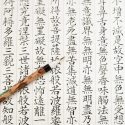
    • Sutra Copying Paper – Choose the appropriate paper that suits your writing instrument. If using a brush or brush pen, select paper that does not bleed, such as torinoko or kana paper. For beginners, recommended paper includes sutra copying paper with ruled lines and paper with the Heart Sutra as a model.


      mini写経用紙(手本付) 20枚入


      販売価格 (税込):378円


      写経用紙 純美濃雁皮 30枚


      販売価格 (税込):907円


    • Sutra Copying Brushes – Sturdy brushes made of rabbit hair, such as “Touhitsu” or “Jakutouhitsu,” which can hold plenty of ink, are recommended. For those who are not familiar with brushes, brush pens are also okay!


      写巻 朱管筆


      販売価格 (税込):414円


      写経筆 小 秀筆堂


      販売価格 (税込):1,059円


      あかしや新毛筆 SA300


      販売価格 (税込):226円


    • Sutra Copying Ink – For sutra copying, high-quality oil soot ink or sumi ink is recommended. Sumi ink has a pleasant fragrance, and you can expect a relaxing effect while grinding the ink.


      五星 紅花墨 1.5丁型 日本製墨製


      販売価格 (税込):1,544円


      写経用墨 0.7丁型 古梅園製


      販売価格 (税込):1,965円


      写経墨純黒 1.5型 古梅園製


      販売価格 (税込):
      4,536円


    • Sutra Copying Ink Liquid – For those who find it challenging to grind ink every time, sutra copying ink liquid is recommended. Using this liquid makes preparation and arrangement much easier.


      三歌仙(写経・芳名) 50cc


      販売価格 (税込):907円


      開明 写経墨汁


      販売価格 (税込):378円


      銀のきらめき


      販売価格 (税込):604円


    • Sutra Copying Inkstone (Suzuri) – Since only a small amount of ink is needed for sutra copying, a portable inkstone of about 3 to 4 inches is recommended. Some inkstones come in cute shapes that fit in the palm of your hand and are housed in wooden boxes. Look for your favorite one.


      宋抗端渓硯 中国刻 3吋


      販売価格 (税込):3,217円


      老坑 天然硯 3吋


      販売価格 (税込):7,395円


      麻子坑 天然硯 4吋


      販売価格 (税込):5,764円


    • Sutra Copying Ink Container (Sumisashi) – This is a dedicated container for dispensing ink liquid. You can also use small dishes or similar items you have at home as substitutes.”

      Ink Container»
  • The daily stress eases away. Through copying scriptures, the mind becomes light and cheerful.

    The daily stress eases away. Through copying scriptures, the mind becomes light and cheerful.

    In recent years, copying scriptures (Shakyō) has been gaining popularity, especially among women.

    Copying scriptures has been loved by people since ancient times, and it has been widely studied as a valuable material for learning the art of calligraphy due to its ease of practice. More and more people are experiencing the benefits of Shakyō, saying that it helps them feel refreshed and uplifted. This trend has become particularly popular among women.

    Originally, Shakyō has been practiced as part of Buddhist practitioners’ training.

    The goal of Shakyō is to cultivate a pure and serene mind, and it has been practiced as a form of training within Buddhism by transcribing Buddhist scriptures. By copying the teachings onto Shakyō paper, one can dispel impure thoughts and regain the inherent stability of the mind, leading to an opportunity to recognize the purity within oneself.

    The highly positive effects of Shakyō include:

    Shakyō, which can be started easily, is believed to have numerous benefits across various areas. Practitioners experience positive changes such as mental relief, potential dementia prevention, improved handwriting, and better posture.

    Shakyō, with a focus on mental detoxification and brain activation, has been gaining attention.

    Effect of Shakyō 1: Effective for Dementia Prevention and Improvement

    Shakyō is believed to be effective for preventing and improving dementia. By enhancing concentration and exercising memory, it is thought to activate the brain and promote healthy cognitive functions. Additionally, it contributes to mental relaxation and stress reduction, potentially reducing the risk of dementia.

    Effect of Shakyō 2: Achieving a Stress-Free Daily Life

    Shakyō is effective in achieving a stress-free daily life by promoting mental stability and relaxation. The act of meticulously transcribing characters helps calm the mind and alleviate daily stress and anxiety. It brings about a sense of well-being and contributes to maintaining a peaceful state of mind.

    Effect of Shakyō 3: Boosting Favorability with Beautiful Handwriting and Posture!

    Shakyō has the effect of increasing favorability from others through the improvement of beautiful handwriting and posture. The practice of meticulously writing characters not only enhances the beauty and style of one’s writing but also helps improve posture. This, in turn, reflects a confident and attractive demeanor, leading to positive evaluations from others.


    Calligraphy Supplies for Shakyō.
    https://shoyu-net.jp/?mode=grp&gid=1458349

  • The History for Sumi of Japan

    The History for Sumi of Japan

    “The introduction of ink (Sumi) to Japan and the history of Japanese ink.”

    The introduction of ink to Japan is believed to have occurred around the same time as the introduction of writing. As indicated by the golden seal of the “Kingdom of Wo” (Kan’Wa Na), it is thought that the people of Han (China) became aware of writing and ink at that time. According to the “Weishu Weiren Zhuan” (Records of Wei: Account of the Wa People) from the year 239, Queen Himiko sent an envoy with a letter to Luoyang in Wei, and it is also mentioned in the “Jinshu” (Book of Jin) and “Songshu” (Book of Song) that the five kings of Wa (San, Chin, Sai, Kō, and Bu) also sent letters. It can be inferred from this that by this time, the existence of brushes and ink was well-established. However, these are only speculations, and detailed information is not known.

    In the “Nihon Shoki” (Chronicles of Japan), it is written that in the 18th year of Empress Suiko (610 AD), in the spring of March, the king of Goguryeo presented a Buddhist scripture to Japan, and a Buddhist monk named Domyeong (from the Asuka period) who accompanied him was knowledgeable in the five classics and skilled in making colored pigments, paper, and ink. This is considered to be the oldest record related to ink in Japan. It is known that when Prince Shotoku wrote the “Hokke Gengi” (Commentary on the Lotus Sutra), he used the pine soot ink brought by Domyeong, and fragments of a circular inkstone found at the ruins of Asuka’s capital indicate that ink was already being ground on inkstones at that time.

    With the implementation of the Ritsuryō system following the death of Prince Shotoku, the Daihō Ritsuryō was enacted in 701, and the Nakatsukasa no Sho (Ministry of Central Affairs) was responsible for ink production. Ink was considered a valuable item and the demand for ink used for copying Buddhist scriptures increased with the flourishing of Buddhism.

    During the Heian period, there was an increase in the mass production of ink, particularly the pine soot ink (Matsu-en sumi), and it began to permeate among the general population. Japan was the pioneer in the development of oil soot ink ahead of other countries, responding to the increasing demand for ink.

    During the late Heian period, there was an active trade between Japan and Song Dynasty China, leading to the introduction of ink painting and the flourishing of calligraphy by Zen monks. This further increased the demand for ink, and many skilled calligraphers emerged in Japan.

    Thus, during the Heian period, while the mass production of pine soot ink (Matsu-en sumi) was widespread, research and development of oil soot ink were also conducted, marking a transitional period for ink.