Author: shoyuonline

  • Choosing an Inkstone

    Choosing an Inkstone

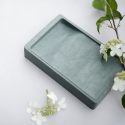
    The inkstone plays a crucial role in obtaining a good ink color. As they say, “an inkstone is a lifelong item,” so try to choose a high-quality inkstone that fits your budget. Depending on your purpose and available space, selecting the size of the inkstone can be a good approach. Additionally, different stones used in inkstones have their unique characteristics, so you may also consider choosing one based on your preferred stone type.

    Inkstone Size

    The unit used to indicate the size of an inkstone is in inches, where 1 inch is approximately 2.5 cm. Although there may be slight variations depending on the manufacturer, inkstones generally come in the following sizes:

    3 inches: Vertical 7.5 cm × Horizontal 6.0 cm

    4 inches: Vertical 10.0 cm × Horizontal 7.0 cm

    5 inches: Vertical 12.5 cm × Horizontal 8.5 cm

    6 inches: Vertical 15.0 cm × Horizontal 10.0 cm

    7 inches: Vertical 17.5 cm × Horizontal 11.5 cm

    8 inches: Vertical 20.0 cm × Horizontal 13.0 cm

    9 inches: Vertical 22.5 cm × Horizontal 14.5 cm

    10 inches: Vertical 25.0 cm × Horizontal 16.5 cm


    Additionally, in the world of Japanese inkstones, there are traditional expressions used to indicate their sizes, such as “Shigohira” (四五平) or “Gosanzun” (五三寸).


    “Nigotabi” (二五度) – 7.5cm (height) x 4.5cm (width)

    “Sango-tabi” (三五度) – 10.5cm (height) x 4.5cm (width)

    “Shinisu” (四二寸) – 12.0cm (height) x 6.0cm (width)

    “Shigohira” (四五平) – 13.5cm (height) x 7.5cm (width)

    “Gosanzun” (五三寸) – 15.0cm (height) x 9.0cm (width)

    “Koshirouku” (小四六) – 16.5cm (height) x 10.5cm (width)

    “Seishirouku” (正四六) – 18.0cm (height) x 12.0cm (width)

    “Ooshirouku” (大四六) – 19.5cm (height) x 13.5cm (width)


    Names of Different Parts of the Inkstone

    The surface of the inkstone is referred to as the “Kenmen” (硯面), and the backside is called the “Ken’in” (硯陰).

    Choosing an Inkstone

    Selecting by Size

    For kana or practical writing: 3 sun to 5 sun (approx. 7.5cm to 12.5cm) For kanji on hanshi or kana strip: 6 sun to 7 sun (approx. 15.0cm to 17.5cm) For kanji with wider lines: 8 sun to 10 sun (approx. 20.0cm to 25.0cm) (* If you often carry it for practice, having a separate inkstone for portable use can be convenient. Please note that the above sizes are rough guidelines.)

    Choosing based on Stone Characteristics

    Inkstones are named according to their place of origin. Each stone has different colors and characteristics, so be sure to find an inkstone that suits your preferences.

    ■雄勝硯(Ogatsu Suzuri)

    Ogatsu Suzuri is a representative type of inkstone made in Miyagi Prefecture, which is a well-known production area for traditional Japanese inkstones.

    Made from black, hard, and compact slate, it possesses excellent luster and uniformity of particles. Its unique characteristics include being pure black, strong against compression and bending, low water absorption rate, and resistance to chemical reactions and long-term deterioration.

    Due to the devastating impact of the Great East Japan Earthquake on March 11, 2011, the representative production areas of traditional Japanese inkstones were severely affected. As a result, the stone is currently sourced from Anhui Province and then processed and shipped from areas including Sendai City, Ishinomaki City, and Ogatsu Town in Miyagi Prefecture.

    Currently, Ogatsu Suzuri is referred to as “Ogatsu Kakou Suzuri” and sold under this name.


    ■細羅紋硯(Sairamonken)

    An affordable inkstone that grinds ink well.

    This inkstone is sourced from the Longwei Mountain area in Jiangxi Province, China, and along the Furong River. It is made by vertically splitting the thin-layered rock material and finishing it into an inkstone, characterized by fine and delicate cross-grain patterns (Sairamon, 羅紋). Due to its affordability and excellent ink-grinding properties, it is highly recommended for beginners.


    ■宋坑端渓硯(Songkeng Duanxi)

    An appealing choice for beginners due to its affordable price.

    This inkstone is sourced from the Axe Ke Mountain area in Gaoyao County, Zhaoqing City, Guangdong Province, China. Among the Duanxi inkstones, it is known for its most reasonable price. It features a brownish stone color, and the stone material is relatively hard, allowing for quick ink grinding. However, be cautious of inkstones with a very shiny surface or a strong reddish hue, as they often indicate an extremely hard stone material, requiring special attention.


    ■新麻子坑端渓硯(Shinmashikou Duanxi)

    Beautiful deep purple stone color with exquisite stone patterns.

    One of the three famous mines, Shinmashikou, is sourced from the Axe Ke Mountain area in Gaoyao County, Guangdong Province, China. It is renowned for its beautiful luster and deep purple stone color, which makes its stone patterns highly desirable. The variety of patterns is second only to Laozi inkstones, and it excels in ink grinding as well. The stone’s fine texture and patterns are remarkable features.

    Please note that the stone does not have a very strong hardness, so it is essential to take care of the inkstone regularly.


    ■坑仔巌端渓硯(Koushigan Duanxi)

    A stone material with excellent fine texture that grinds ink well.

    Sourced from the Axe Ke Mountain area in Gaoyao County, Guangdong Province, China, this inkstone is located on the southern slope of Lao Keng, which is why it bears a strong resemblance to the Lao Keng Duanxi inkstone. Although it tends to be relatively smaller in size, it boasts an ink-absorbing stone material with a remarkably fine texture, and some inkstones exhibit a stone pattern called “Gan” (眼). The stone color is mainly reddish-purple, and compared to the Lao Keng Duanxi inkstone, it produces a sound similar to metal due to the drier nature of the stone.


    ■老坑端渓(Lao Keng Duanxi)

    The Finest Grade of Duanxi Inkstone

    Sourced from the Axe Ke Mountain area in Gaoyao County, Guangdong Province, China, this inkstone is considered the finest grade among Duanxi inkstones. Some of these inkstones can be quite expensive, reaching tens of thousands of yen, and many of them exhibit a pale purple color. They are excellent for grinding ink, providing a smooth and fluid sensation as the ink dissolves while grinding.

    When wet with water, some inkstones reveal various patterns. Although historically known as the top-quality Duanxi inkstone, the mining of this stone has now been discontinued, making it difficult to obtain larger ones.

    Choosing Based on Appearance

    Inkstones come in various colors, shapes, and carvings, and no two high-quality inkstones are exactly alike. Some people may be torn between choosing an oval-shaped or square-shaped one, but it’s entirely up to your personal preference. The choice of carvings is also subjective; some may prefer inkstones with carvings, while others may prefer plain ones. There is no right or wrong choice – simply pick what you like.

    Choosing Based on ‘Houbou’ (鋒鋩)

    The countless fine irregularities on the inkstone’s surface are referred to as “Houbou” (鋒鋩), and they play an essential role as the “file” in grinding ink. A good-quality inkstone is characterized by fine and smooth Houbou, allowing for easy grinding of high-quality ink.

    Please note that Houbou is not permanent. If it wears down and makes ink grinding difficult, you will need to use a dedicated whetstone to re-sharpen the Houbou. Also, nowadays, many inkstones are cosmetically enhanced for display purposes, making it challenging to judge the actual Houbou just by touching them. When using an inkstone with cosmetic enhancements for the first time, sharpening it with a whetstone can significantly improve its ink-grinding performance.

    Choosing Based on Weight

    When uncertain about which inkstone to purchase, go for the heavier one. The weight can serve as a reference for judging the tightness of the inkstone’s pores, which is not easily discernible by appearance alone.

    Conclusion

    Grinding excellent ink with a top-quality inkstone is the ultimate luxury. By cherishing your choice of inkstone, you can grind ink effortlessly and produce deep and rich ink. At Shogu Online, we offer a wide range of inkstones in different sizes, types, and price ranges. Find your favorite inkstone here.
    Inkstones available for purchase at Shoyu Online are here.»

  • How to grind ink

    How to grind ink

    Beautiful ink is created by gently and slowly grinding it with a weak force.

    To bring out the true color of the ink, it is considered most important to use freshly drawn water and gently grind the ink with only the weight of the ink on the inkstone, slowly and with a weak force.

    The act of “grinding ink” is not merely about creating ink liquid but also regarded as an important practice that allows one to find tranquility through the pleasant fragrance and faint grinding sound of the ink. It offers a chance to calm the mind and experience a serene excitement while contemplating the ink color, brushes, and paper, nurturing creative ideas.

    Throughout history, it has been said that “it is good for the sick and young girls to grind ink” and “ink should be ground with the weight of the ink only.” These statements reflect the idea that enjoying the tactile sensation of ink and inkstone without exerting force is desirable.

    This appreciation for the joy of carefully grinding ink is believed to have been cherished by our ancestors, who deeply loved the four treasures of the study (writing brush, ink stick, inkstone, and paper) and understood the value of spending time to relish the process.

    How to grind ink

    There are actually several methods of grinding ink, and they can be divided into three categories based on their purpose. Let me explain them in a straightforward manner. Each method has slightly different characteristics, so consider the type of ink you want to create and choose the appropriate grinding method.

    General Ink Grinding Method:

    In daily calligraphy practice, it would be ideal to take your time and carefully grind good-quality ink. However, we understand that it might not always be possible. Therefore, let us introduce a common and efficient method for grinding ink.

    〈The steps are as follows:〉

    Step 1: Drop water on the surface of the inkstone, about the size of a 10 yen coin.

    Step 2: Calm your mind and start grinding the ink slowly.

    Allow the water droplet and the ink to gradually mix together, and continue patiently until it reaches a certain level of concentration. As you progress with the grinding, the ink will become sticky, and there will be a moment when a pleasant fragrance of ink wafts up. This is said to be an indication of the completion of the grinding, but it’s best to adjust the concentration to your preference.

    Step 3: Once the ink has been ground, add a small amount of water again and continue grinding. Repeat this process until the ink naturally flows away into the “sea” of the inkstone. The “sea” of the inkstone is the place for mixing, so be sure not to grind the ink in the “sea.”

    Step 4: Repeat steps ① to ③ until you have the required amount of ink. Add water gradually and create the desired consistency while controlling the brush strokes.

    Once you finish grinding the ink, carefully wipe off any remaining moisture from the inkstone using a cloth or paper. After cleaning it, store the ink properly in a paulownia box for preservation.


    When you want to create light ink:

    Light-colored ink with a soft impression is also used in watercolor painting. Here’s how to grind ink when you want to create light ink.

    〈Procedure〉

    ① Drop a small droplet of water on the surface of the inkstone. When you want to create light ink, a very small amount of water is sufficient.

    Step 2: Calm your mind and start grinding the ink slowly. Allow the water droplet and the ink to gradually mix together, and continue patiently until it transforms from a muddy consistency to a sticky state. As you progress with the grinding, there will be a moment when a pleasant fragrance of ink wafts up. Enjoy the various transformations of the ink. Once it reaches the sticky state, the process is complete.

    〈Grinding Process〉

    〈Muddy state〉


    〈Sticky state〉

    Step 3: Prepare a sufficient amount of water in a separate container for dilution. A plate or dish can be used as a container. The required amount may vary depending on what you are writing, so it’s good to consider the overall quantity needed and prepare the container accordingly. Step 4: Drop the concentrated ink from Step 2 into the container with water and mix it well. Gradually add the concentrated ink and adjust while checking the color to create light ink.

    Step 5: Once you achieve your preferred level of concentration, your light ink is complete.

    After finishing the grinding process, carefully wipe off any remaining moisture from the inkstone using a cloth or paper. Then, store the ink properly in a paulownia box after proper maintenance.


    When you want to make good ink:

    To bring out the true color of the ink, it is essential to create fine particles of ink. Fine particles of ink spread delicately in water and blend easily. They also influence the color of the ink when applied to paper. It is important to aim for creating the highest quality ink possible.

    〈Procedure〉

    ① Drop water on the surface of the inkstone, about the size of a 10 yen coin.

    Step 2: Calm your mind and start grinding the ink slowly. Allow the water droplet and the ink to gradually mix together, and continue patiently until it transforms from a muddy consistency to a sticky state. As you progress with the grinding, there will be a moment when a pleasant fragrance of ink wafts up. Enjoy the various transformations of the ink. The ink you ground on the inkstone will naturally flow away into the “sea,” which indicates the completion of the grinding process.


    〈Grinding Process:〉


    〈Muddy state〉


    〈Sticky state〉

    Step 3: Add a small amount of water and mix. At this stage, add water in small amounts at a time to achieve your preferred level of concentration, as adding too much water at once might dilute the ink excessively.

    Step 4: Pour the ink into the “sea” (inkwell) and mix it thoroughly.

    If you are using a flat inkstone without an “inkwell,” you can transfer the ink to a separate container and mix it there. When diluting ultra-concentrated ink to achieve the desired concentration, it is essential to dilute it gradually and mix it thoroughly. Avoid diluting it all at once.

    The ultra-high concentration ink created in this way has very fine particles, blends well with water, and makes adjusting the concentration much easier. This method can be considered the most desirable. After finishing the grinding process, carefully wipe off any remaining moisture from the inkstone using a cloth or paper. Then, store the ink properly in a paulownia box after proper maintenance.

    How to grind the ink:

    There are two main methods for grinding ink.

    A: Grinding in a circular motion, similar to drawing the character “の” (no).

    This method of grinding in circular motions is said to allow the force to naturally flow out, but it is also known to accumulate ink residue on the inkstone.

    B: Grinding in a linear motion, similar to drawing the character “N” (N).

    Grinding in a linear motion is said to be prone to exerting too much force, but it is less likely to accumulate ink residue on the inkstone.

    Some say that grinding in a linear motion brings out the true color of the ink, while others may argue differently. There is no definitive answer as to which method is correct. What is important is to grind in a way that feels comfortable for you.

    Holding the Ink:

    You may wonder about the best angle to place the ink on the inkstone. There are two main ways of holding the ink: at a perpendicular angle and at an inclined angle to the inkstone. When time is limited, and you want to grind the ink quickly, it becomes essential to increase the contact area between the ink and the inkstone. A larger grinding surface allows for faster grinding.

    A: Holding the ink straight up

    This method involves placing the ink perpendicular to the inkstone and leveling the grinding surface. The size of the grinding surface remains the same throughout, but the initial contact area with the inkstone is larger compared to B.

    〈Leveling the grinding surface〉

    B: Holding the ink at an inclined angle

    This method involves placing the ink on the inkstone at an inclined angle. There are two variations to this method: one involves grinding the ink on both sides alternately to create a V-shaped grinding surface, and the other involves grinding only one side to create an acute angle grinding surface. The initial contact area with the inkstone is small, but as you continue grinding, it gradually expands and becomes an acute angle, resulting in the largest grinding surface.


    〈Creating a V-shaped grinding surface〉


    〈Creating an acute angle grinding surface〉

    We have introduced three different methods of holding the ink, and you are free to choose any of them. While it is unlikely that the method of holding the ink will significantly affect the ink color, what is

    essential is to select a method that feels comfortable for you and to grind skillfully.

    Method for Grinding Ink Quickly

    As a busy modern individual, it is understandable that you would prefer to grind the ink quickly. So, how can you achieve that? The answer is quite simple.

    Increase the contact area between the ink and the inkstone. In terms of grinding ink quickly, method B (holding the ink at an inclined angle and grinding only one side to create an acute angle grinding surface) is recommended. It may take some time to achieve a complete incline, but a larger contact area with the inkstone will result in faster grinding.

    Another method is to stack 2-3 pieces of ink on a large inkstone and grind them together, which also increases the contact area and allows for quicker grinding. However, this approach may not be very practical.

    If you are short on time, using an “ink grinding machine” that grinds the ink for you is also recommended. This can be especially useful when you need a large amount of ink for creating significant works.

  • The selection of materials for sutra copying and a beginner’s set

    The selection of materials for sutra copying and a beginner’s set

    If you have all the tools for copying sutras, you can write every day.

    “When starting sutra copying, you may wonder what you need to prepare. Besides the basic brush and paper, I will introduce additional tools to make sutra copying more convenient and enjoyable.

    • Sutra Copying Paper – Choose the appropriate paper that suits your writing instrument. If using a brush or brush pen, select paper that does not bleed, such as torinoko or kana paper. For beginners, recommended paper includes sutra copying paper with ruled lines and paper with the Heart Sutra as a model.


      mini写経用紙(手本付) 20枚入


      販売価格 (税込):378円


      写経用紙 純美濃雁皮 30枚


      販売価格 (税込):907円


    • Sutra Copying Brushes – Sturdy brushes made of rabbit hair, such as “Touhitsu” or “Jakutouhitsu,” which can hold plenty of ink, are recommended. For those who are not familiar with brushes, brush pens are also okay!


      写巻 朱管筆


      販売価格 (税込):414円


      写経筆 小 秀筆堂


      販売価格 (税込):1,059円


      あかしや新毛筆 SA300


      販売価格 (税込):226円


    • Sutra Copying Ink – For sutra copying, high-quality oil soot ink or sumi ink is recommended. Sumi ink has a pleasant fragrance, and you can expect a relaxing effect while grinding the ink.


      五星 紅花墨 1.5丁型 日本製墨製


      販売価格 (税込):1,544円


      写経用墨 0.7丁型 古梅園製


      販売価格 (税込):1,965円


      写経墨純黒 1.5型 古梅園製


      販売価格 (税込):
      4,536円


    • Sutra Copying Ink Liquid – For those who find it challenging to grind ink every time, sutra copying ink liquid is recommended. Using this liquid makes preparation and arrangement much easier.


      三歌仙(写経・芳名) 50cc


      販売価格 (税込):907円


      開明 写経墨汁


      販売価格 (税込):378円


      銀のきらめき


      販売価格 (税込):604円


    • Sutra Copying Inkstone (Suzuri) – Since only a small amount of ink is needed for sutra copying, a portable inkstone of about 3 to 4 inches is recommended. Some inkstones come in cute shapes that fit in the palm of your hand and are housed in wooden boxes. Look for your favorite one.


      宋抗端渓硯 中国刻 3吋


      販売価格 (税込):3,217円


      老坑 天然硯 3吋


      販売価格 (税込):7,395円


      麻子坑 天然硯 4吋


      販売価格 (税込):5,764円


    • Sutra Copying Ink Container (Sumisashi) – This is a dedicated container for dispensing ink liquid. You can also use small dishes or similar items you have at home as substitutes.”

      Ink Container»
  • How to prepare the brush (fude) with ink:

    How to prepare the brush (fude) with ink:

    Taking care of calligraphy tools is extremely important. With proper care, even a good brush can quickly become unusable. Let me introduce you to the first step in using the brush with care.

    When you purchase a new brush, it may come with the bristles pre-prepared, but most brushes are coated with glue. Brushes with pre-prepared bristles can be used as they are, but for those with glue, you need to remove the glue before the ink can adhere to the bristles. Therefore, if you don’t do this properly, you won’t be able to use the brush effectively.

    1. I will now provide you with easy-to-understand maintenance methods, so you can choose the appropriate way to prepare your brush based on your needs.

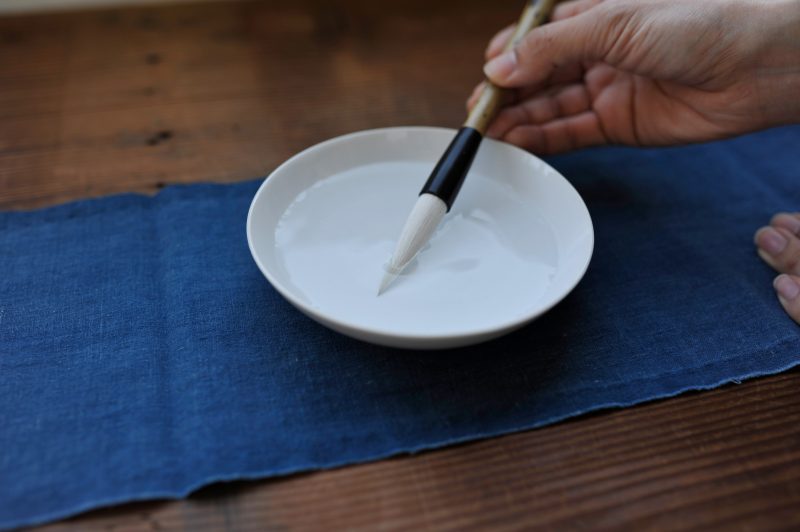
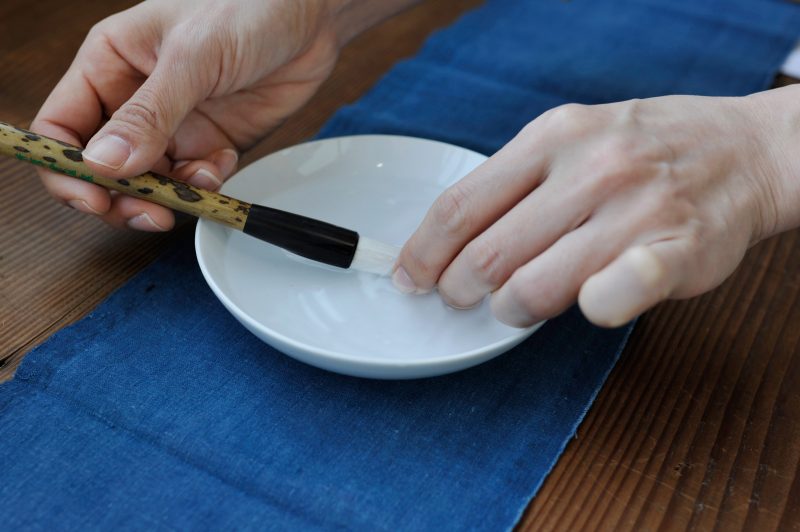
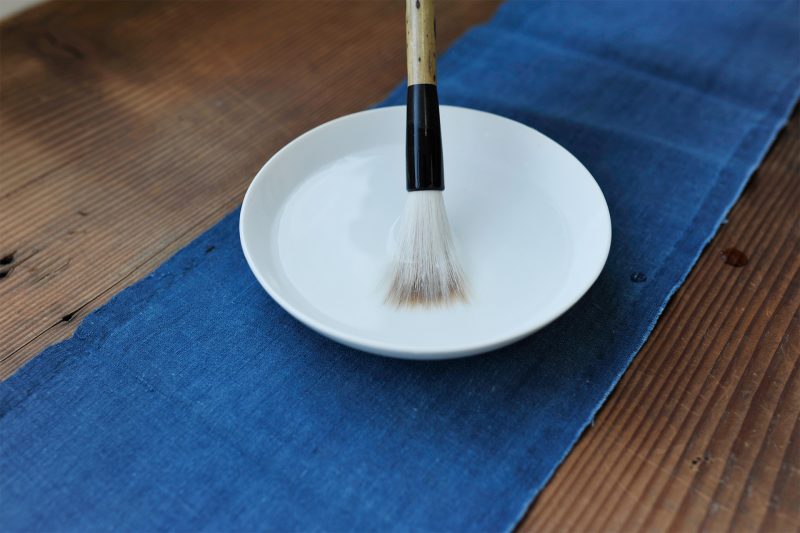
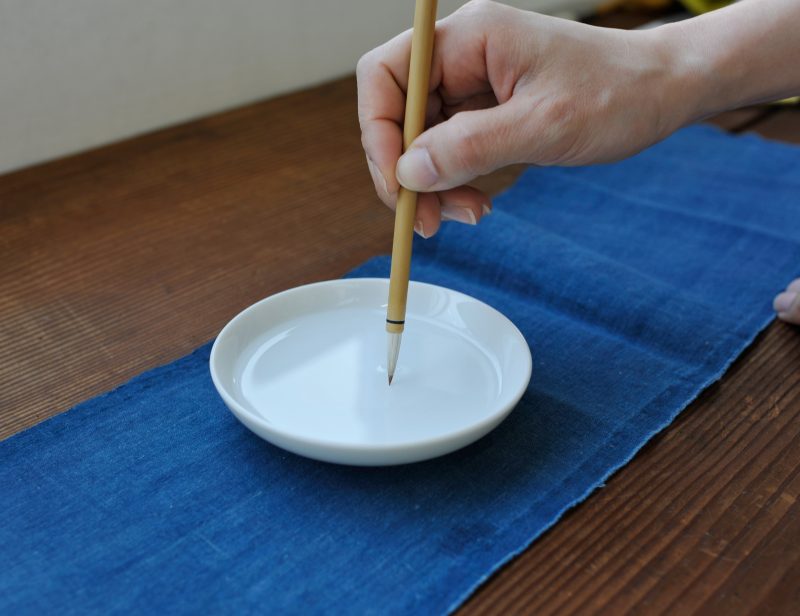
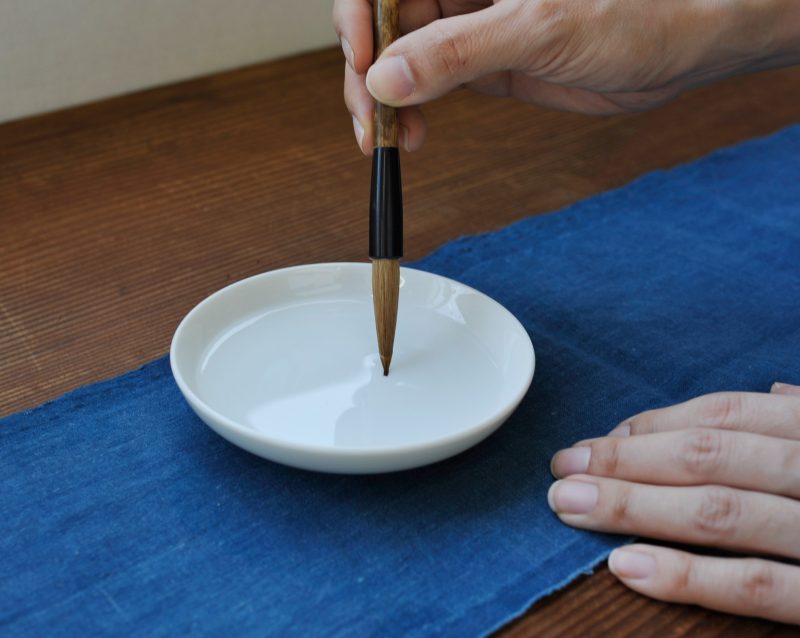
    ① Prepare lukewarm water and moisten the brush tip in it.

    ② Gently untangle the bristles from the tip to the base using your fingers.

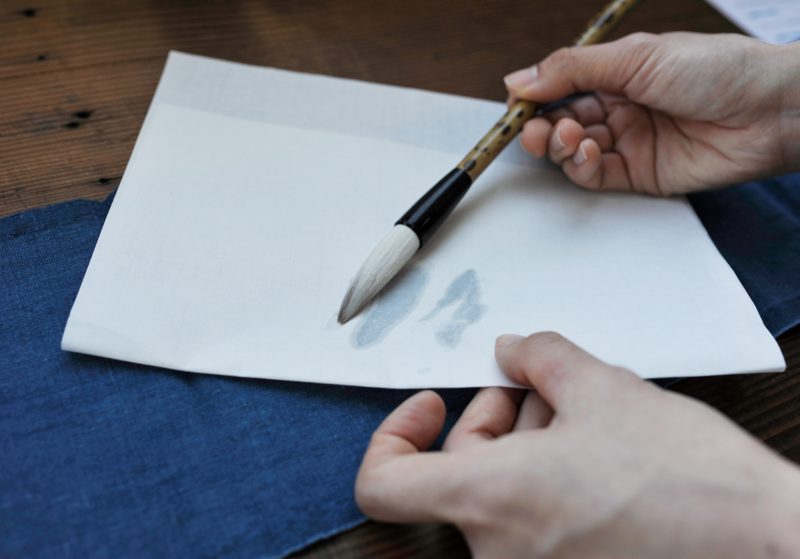
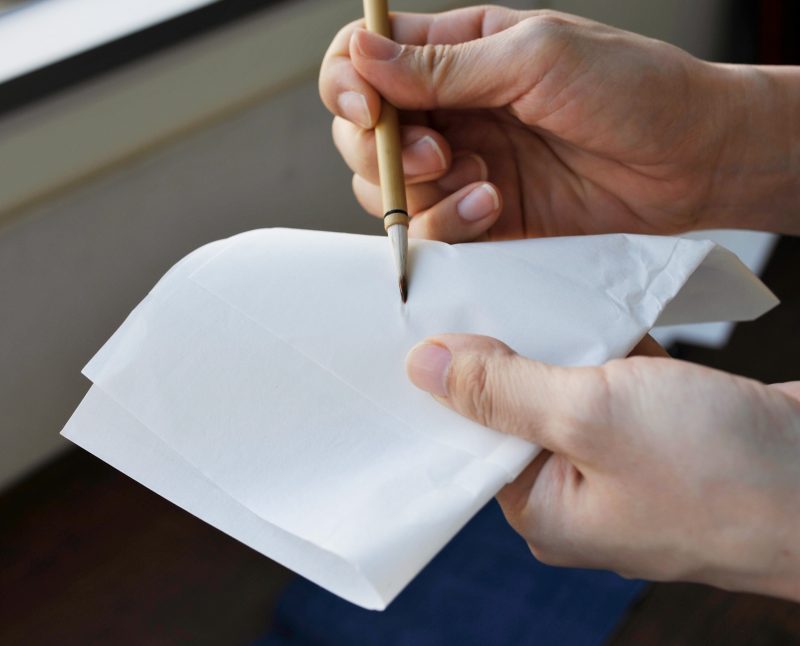
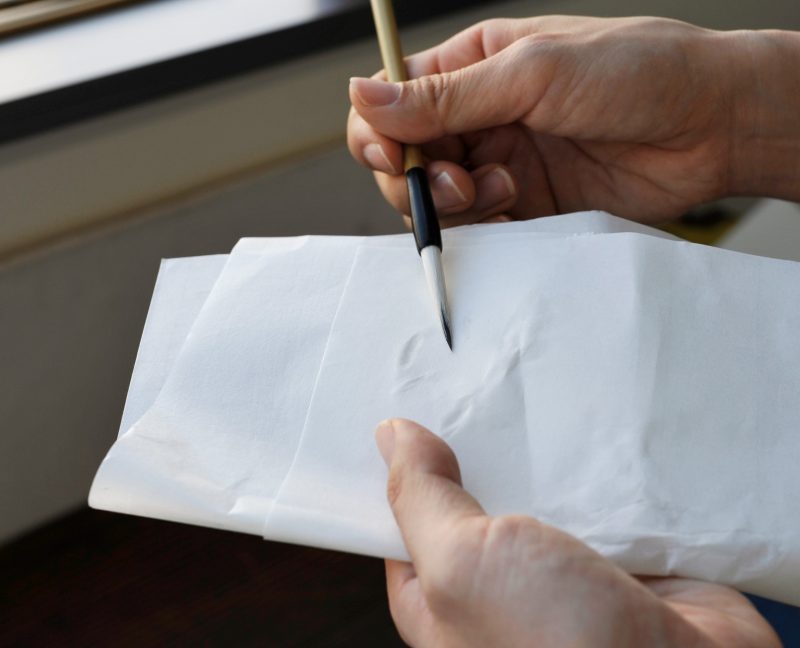
    ③ The lukewarm water may become murky. Make sure to remove the glue inside the brush (if applicable) thoroughly, and use paper or cloth to wipe away the moisture. (Please remove any loose or fine hairs that may come off during this process.)

    Method of using only the tip of the brush:

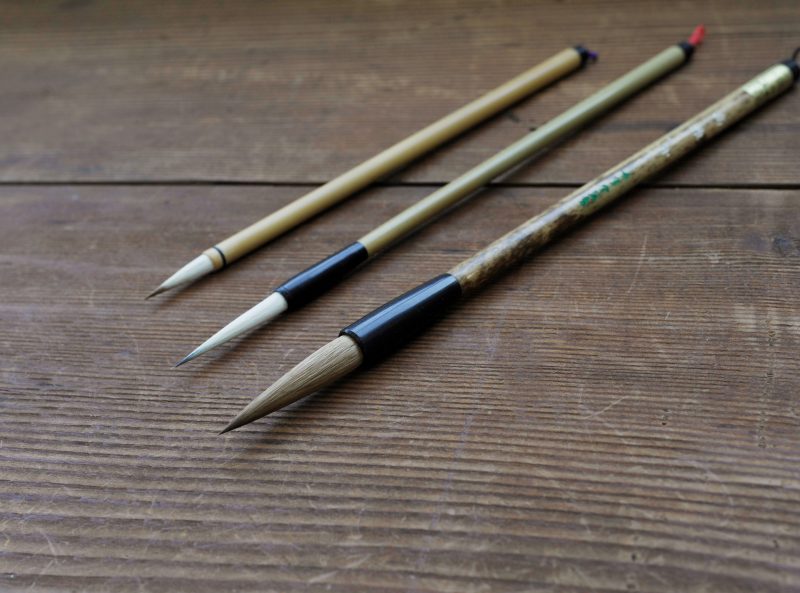
    For fine writing such as Shakyō, Kana characters, and name writing, you use only the tip of the brush. Instead of fully submerging the brush, you dip only the tip in ink. The length of the exposed tip affects the thickness and style of the characters. Adjusting the length of the tip allows you to bring out the unique characteristics of the brush strokes.

    Even with stiffer brushes, such as those with coarse hair, you may choose to use only the tip to better utilize its potential. Adjust the length to suit your purpose and the type of characters you wish to write.

    How to Prepare the Brush:

    Depending on the type of brush—fine brush, Kana brush, or large brush—please refer to the respective methods below:

    【For a Fine Brush】

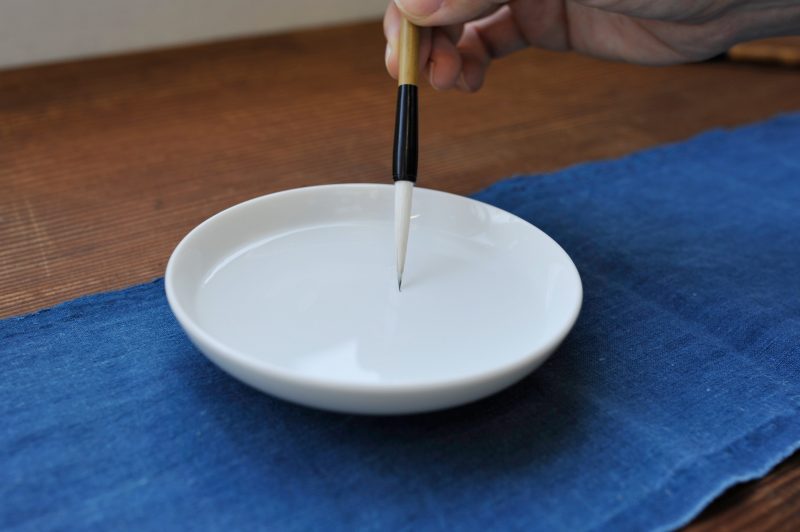
    Prepare lukewarm water and moisten about one-third of the brush tip. Envision the type of characters you want to write, and then adjust the length of the exposed brush tip accordingly.

    【For a Kana Brush】 

    Prepare lukewarm water and moisten about one-third of the brush tip. Envision the Kana characters you want to write, and then adjust the length of the exposed brush tip accordingly.

    【For a Large Brush】 

    Prepare lukewarm water and moisten about one-third of the brush tip. If necessary, gently untangle the brush tip without dipping it in water. Then, expose about one-fourth of the brush tip. Be cautious with brushes that have different-colored decorative bristles, as overexposing the brush may cause the decorative bristles to become untidy.

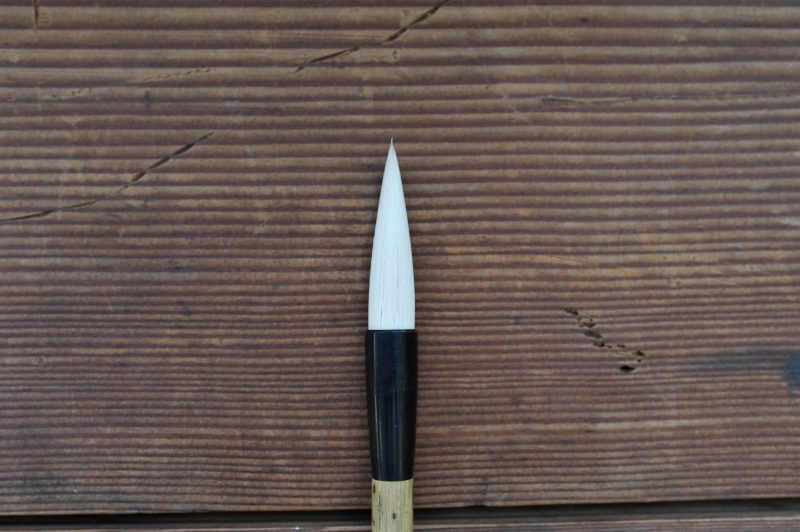
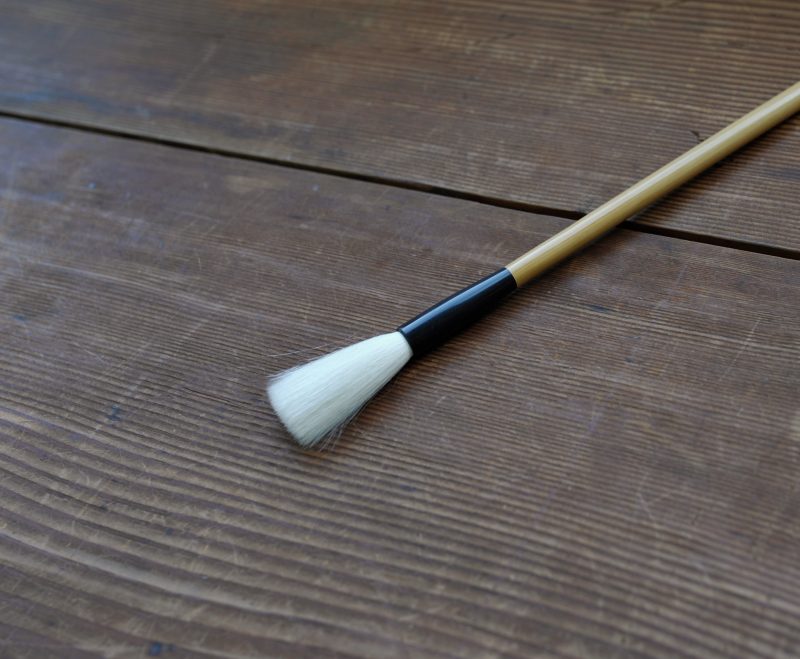
    For a “Sabaki Fude” (捌き筆) or scatter brush, it is a brush without glue, also known as a loose-haired brush. In this case, you can use it as it is without any preparation. However, if you find it necessary, you can lightly rinse it with water before use.

    After finishing, it is best to wash the brush under running water, then use a brush comb to tidy up any unnecessary hairs. Once the brush is thoroughly dry, it is ready for use. It is recommended to let the brush dry after preparing it before using it. To improve air circulation, you can remove the cap, as it is usually sealed.

    While the method of preparing the brush may seem basic, it is a fundamental aspect that applies to all aspects of calligraphy. Treating each brush with care and using it diligently is essential to continue using them for a long time.

  • The daily stress eases away. Through copying scriptures, the mind becomes light and cheerful.

    The daily stress eases away. Through copying scriptures, the mind becomes light and cheerful.

    In recent years, copying scriptures (Shakyō) has been gaining popularity, especially among women.

    Copying scriptures has been loved by people since ancient times, and it has been widely studied as a valuable material for learning the art of calligraphy due to its ease of practice. More and more people are experiencing the benefits of Shakyō, saying that it helps them feel refreshed and uplifted. This trend has become particularly popular among women.

    Originally, Shakyō has been practiced as part of Buddhist practitioners’ training.

    The goal of Shakyō is to cultivate a pure and serene mind, and it has been practiced as a form of training within Buddhism by transcribing Buddhist scriptures. By copying the teachings onto Shakyō paper, one can dispel impure thoughts and regain the inherent stability of the mind, leading to an opportunity to recognize the purity within oneself.

    The highly positive effects of Shakyō include:

    Shakyō, which can be started easily, is believed to have numerous benefits across various areas. Practitioners experience positive changes such as mental relief, potential dementia prevention, improved handwriting, and better posture.

    Shakyō, with a focus on mental detoxification and brain activation, has been gaining attention.

    Effect of Shakyō 1: Effective for Dementia Prevention and Improvement

    Shakyō is believed to be effective for preventing and improving dementia. By enhancing concentration and exercising memory, it is thought to activate the brain and promote healthy cognitive functions. Additionally, it contributes to mental relaxation and stress reduction, potentially reducing the risk of dementia.

    Effect of Shakyō 2: Achieving a Stress-Free Daily Life

    Shakyō is effective in achieving a stress-free daily life by promoting mental stability and relaxation. The act of meticulously transcribing characters helps calm the mind and alleviate daily stress and anxiety. It brings about a sense of well-being and contributes to maintaining a peaceful state of mind.

    Effect of Shakyō 3: Boosting Favorability with Beautiful Handwriting and Posture!

    Shakyō has the effect of increasing favorability from others through the improvement of beautiful handwriting and posture. The practice of meticulously writing characters not only enhances the beauty and style of one’s writing but also helps improve posture. This, in turn, reflects a confident and attractive demeanor, leading to positive evaluations from others.


    Calligraphy Supplies for Shakyō.
    https://shoyu-net.jp/?mode=grp&gid=1458349

  • The History for Sumi of Japan

    The History for Sumi of Japan

    “The introduction of ink (Sumi) to Japan and the history of Japanese ink.”

    The introduction of ink to Japan is believed to have occurred around the same time as the introduction of writing. As indicated by the golden seal of the “Kingdom of Wo” (Kan’Wa Na), it is thought that the people of Han (China) became aware of writing and ink at that time. According to the “Weishu Weiren Zhuan” (Records of Wei: Account of the Wa People) from the year 239, Queen Himiko sent an envoy with a letter to Luoyang in Wei, and it is also mentioned in the “Jinshu” (Book of Jin) and “Songshu” (Book of Song) that the five kings of Wa (San, Chin, Sai, Kō, and Bu) also sent letters. It can be inferred from this that by this time, the existence of brushes and ink was well-established. However, these are only speculations, and detailed information is not known.

    In the “Nihon Shoki” (Chronicles of Japan), it is written that in the 18th year of Empress Suiko (610 AD), in the spring of March, the king of Goguryeo presented a Buddhist scripture to Japan, and a Buddhist monk named Domyeong (from the Asuka period) who accompanied him was knowledgeable in the five classics and skilled in making colored pigments, paper, and ink. This is considered to be the oldest record related to ink in Japan. It is known that when Prince Shotoku wrote the “Hokke Gengi” (Commentary on the Lotus Sutra), he used the pine soot ink brought by Domyeong, and fragments of a circular inkstone found at the ruins of Asuka’s capital indicate that ink was already being ground on inkstones at that time.

    With the implementation of the Ritsuryō system following the death of Prince Shotoku, the Daihō Ritsuryō was enacted in 701, and the Nakatsukasa no Sho (Ministry of Central Affairs) was responsible for ink production. Ink was considered a valuable item and the demand for ink used for copying Buddhist scriptures increased with the flourishing of Buddhism.

    During the Heian period, there was an increase in the mass production of ink, particularly the pine soot ink (Matsu-en sumi), and it began to permeate among the general population. Japan was the pioneer in the development of oil soot ink ahead of other countries, responding to the increasing demand for ink.

    During the late Heian period, there was an active trade between Japan and Song Dynasty China, leading to the introduction of ink painting and the flourishing of calligraphy by Zen monks. This further increased the demand for ink, and many skilled calligraphers emerged in Japan.

    Thus, during the Heian period, while the mass production of pine soot ink (Matsu-en sumi) was widespread, research and development of oil soot ink were also conducted, marking a transitional period for ink.