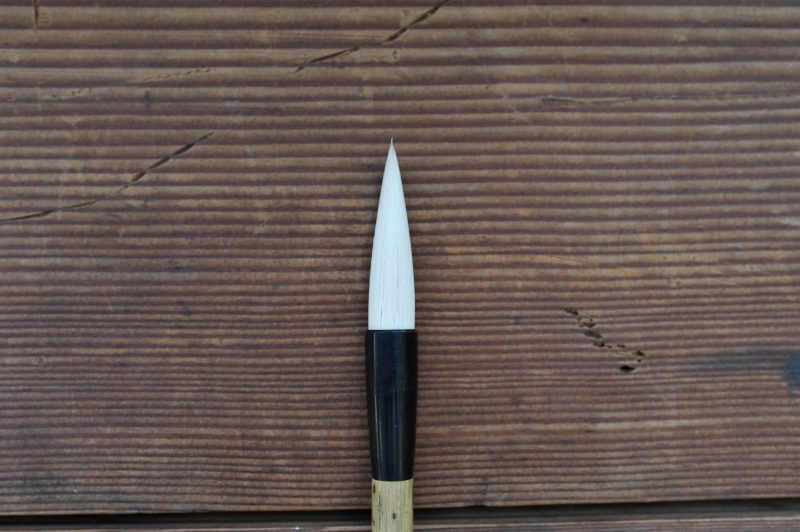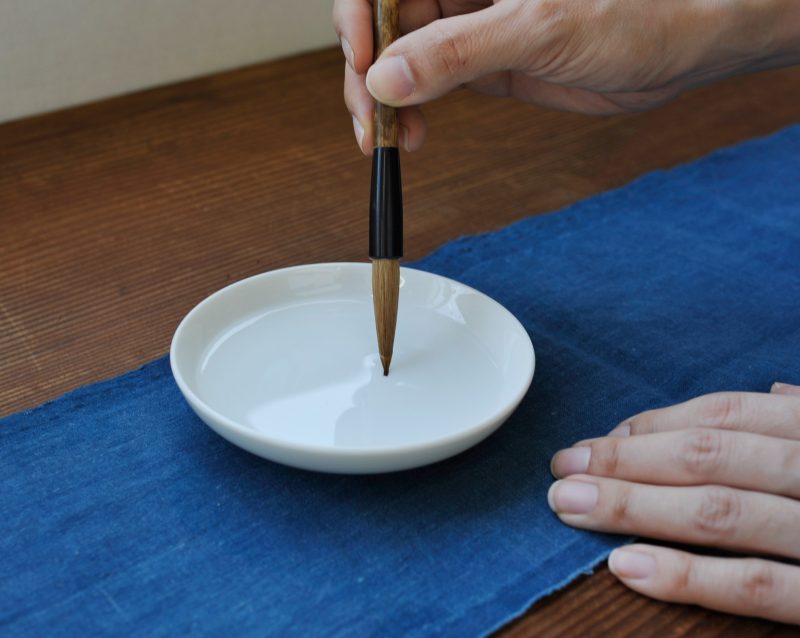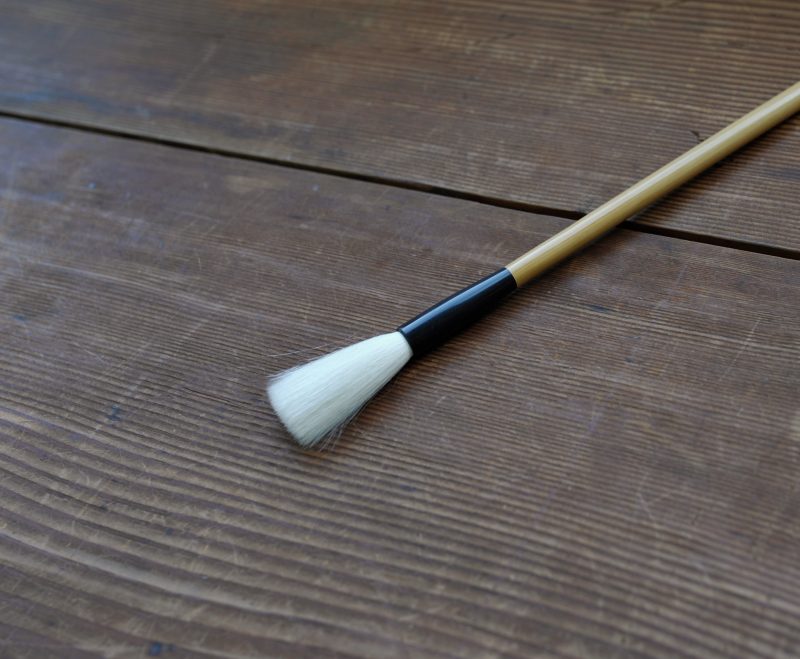
Taking care of your calligraphy tools is incredibly important. Good brushes can quickly deteriorate if not properly maintained on a daily basis. We’ll introduce you to the proper care methods, so whether you’re new to this or experienced, take a moment to review.
How to Clean Brushes
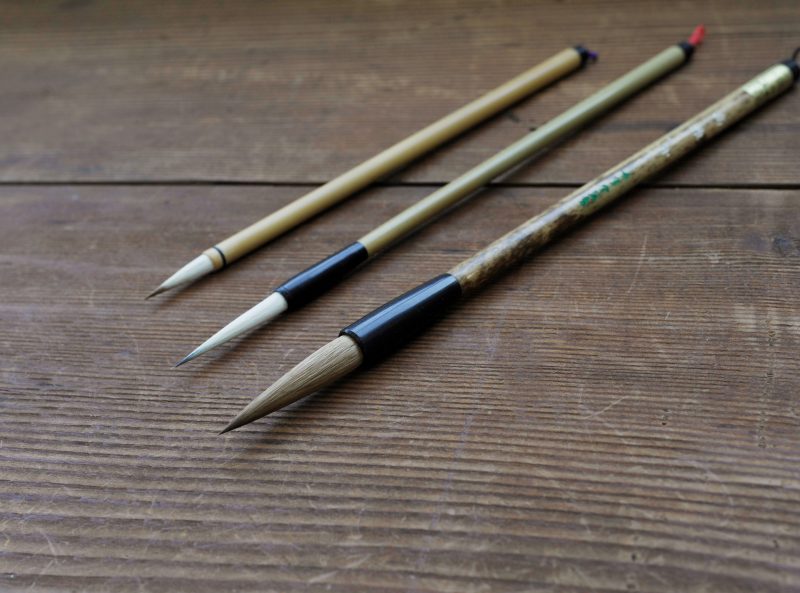
Calligraphy brushes come in various bristle types, sizes, and thicknesses, tailored for different purposes. Here, we’ll outline the cleaning process for two fundamental types: large and small brushes. If you’re interested in learning about how to prepare new brushes, we also have a separate guide for that.
Cleaning a Large Brush
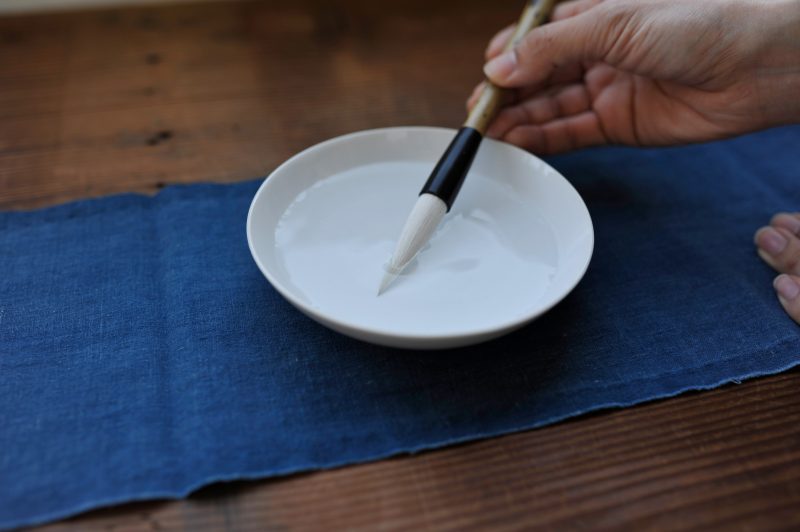
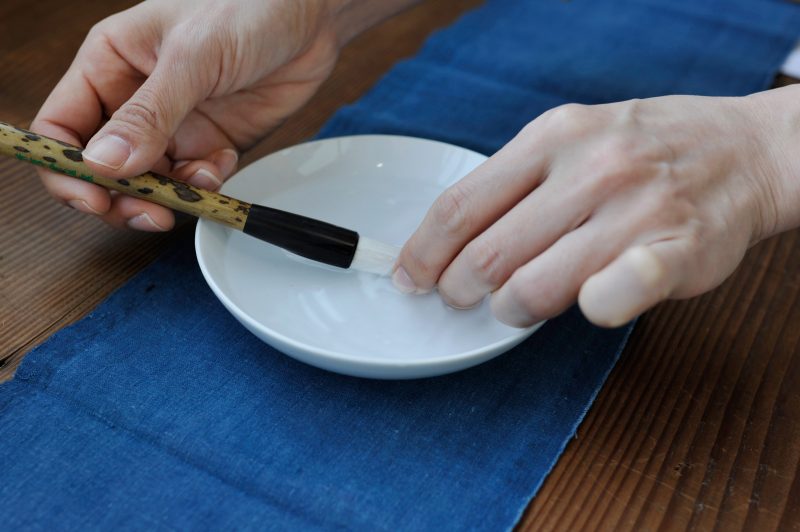
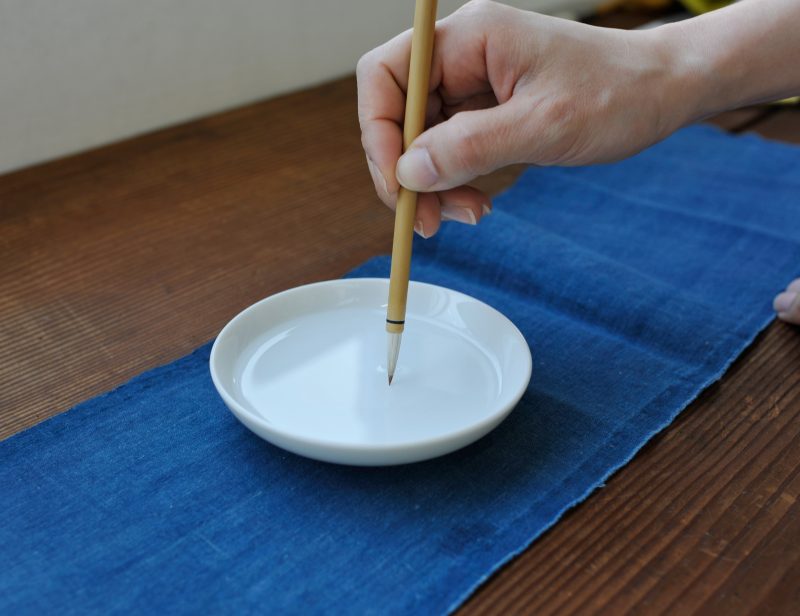
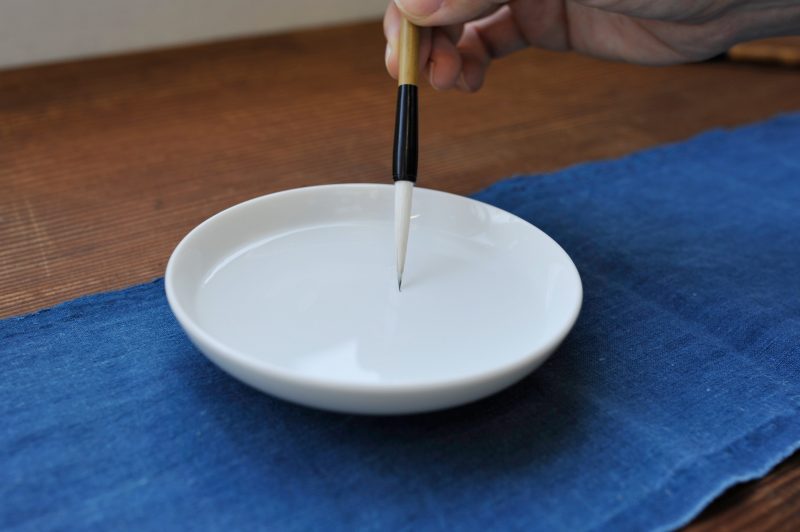
①Thoroughly rinse the base of the bristles under lukewarm water, gently massaging them to untangle any knots. You can use either running water or still water for this, but ensure the temperature is around 30 to 40°C (86 to 104°F).
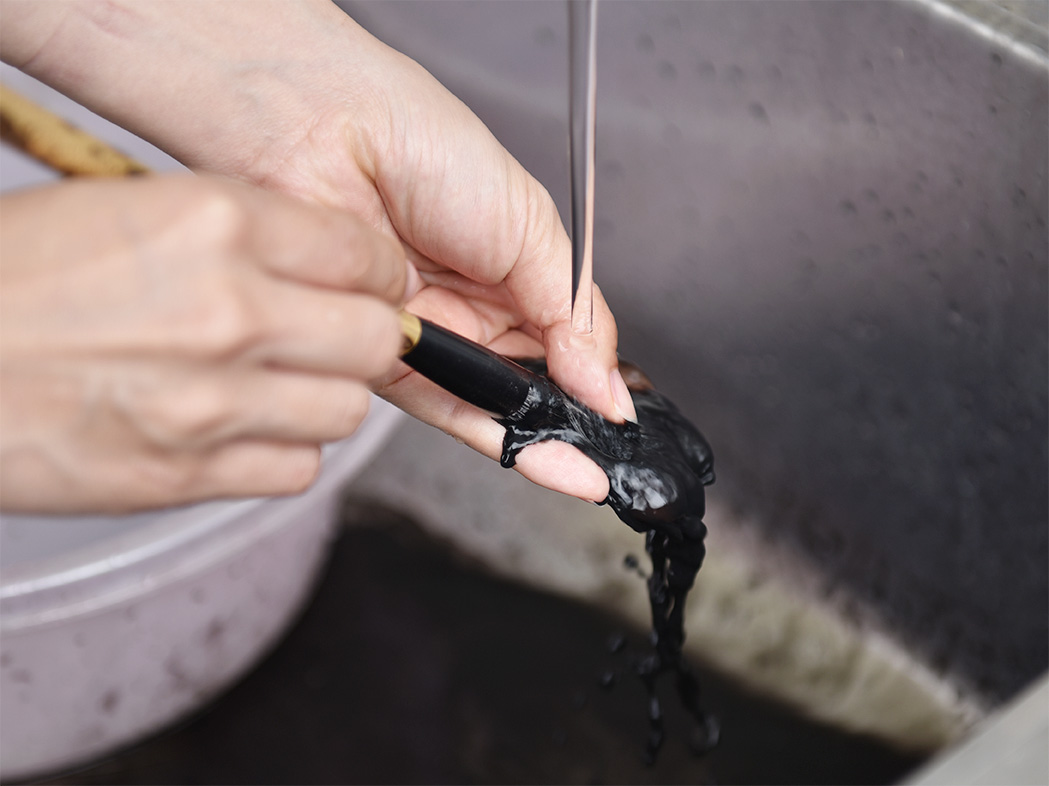
The bristles of a brush are not visible, but they extend deep into the base where they are inserted. If you can remove the ink that has penetrated into these hidden parts, the bristles are less likely to be damaged, and issues like bristle decay, shedding, or brush cracking are minimized. However, since it’s not possible to directly wash the inner parts, focus on gently massaging the base of the bristles. If you touch it, you might feel some stiffness or resistance. While it might seem like the ink isn’t coming off at first glance, it’s crucial to wash the brush repeatedly multiple times.
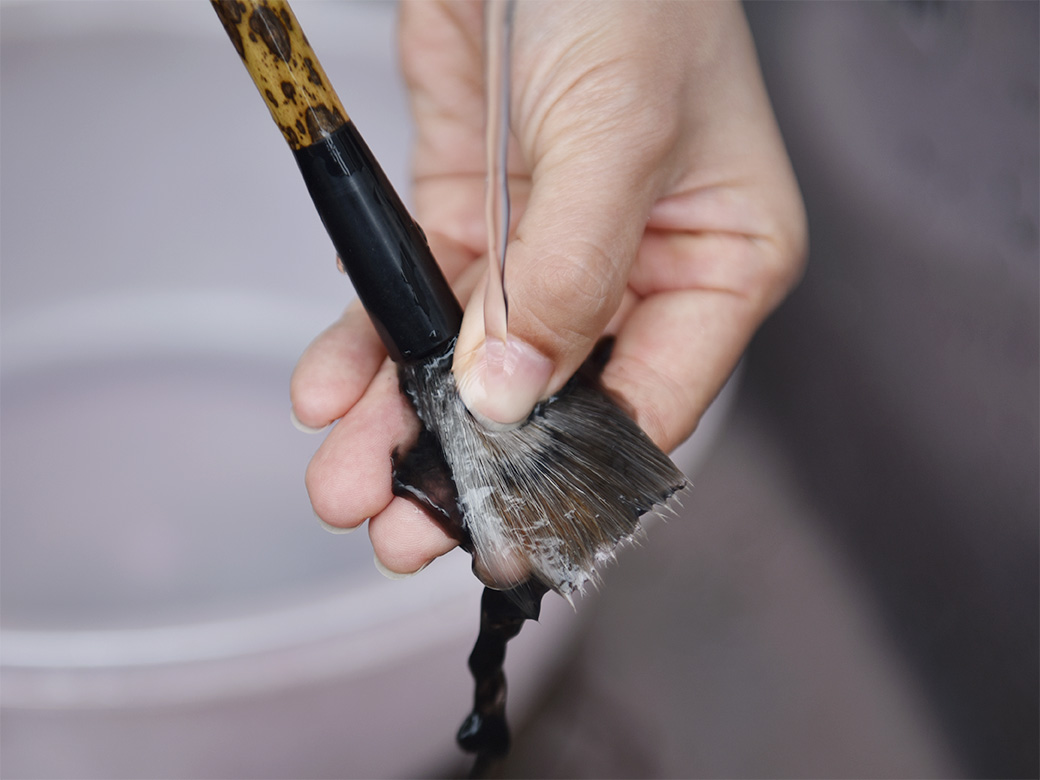
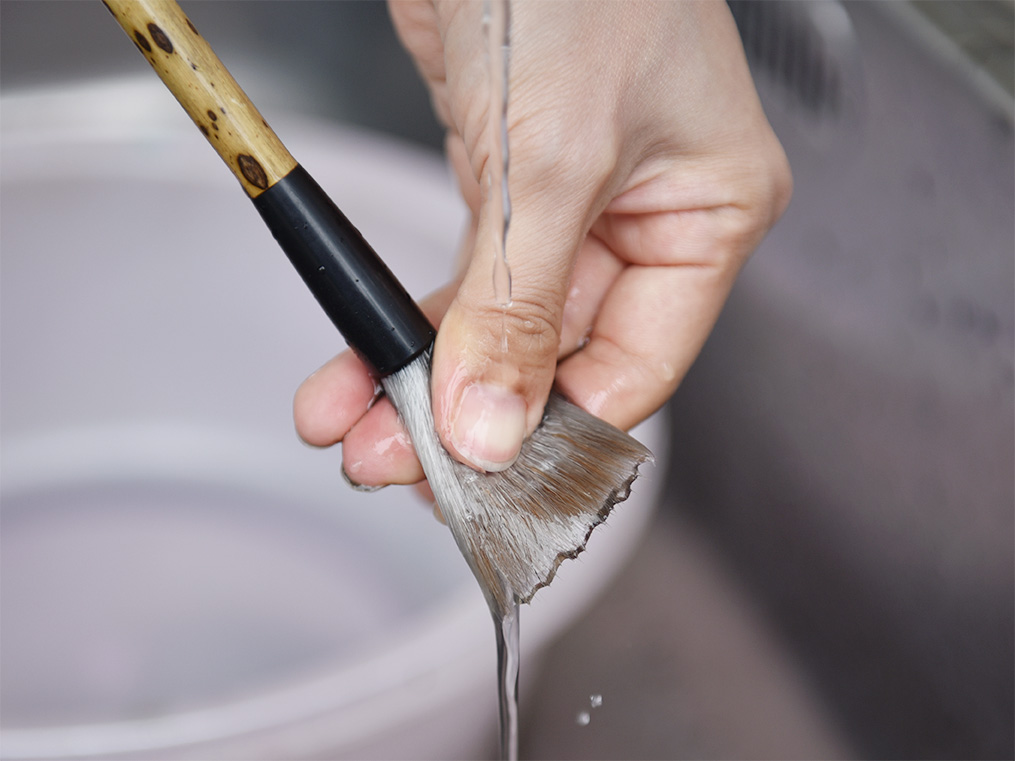
Although you wash it over and over, ink will continue to come out. Please wash it persistently to remove the ink as much as possible.
②After finishing the washing, gently squeeze the bristles to remove excess water.
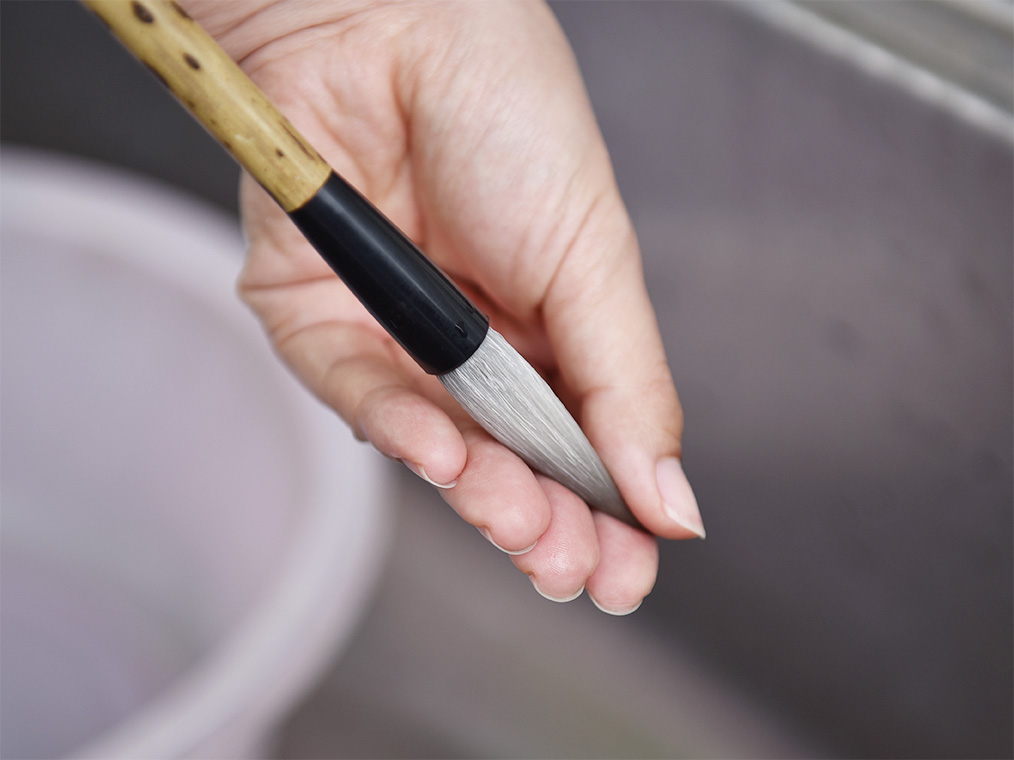
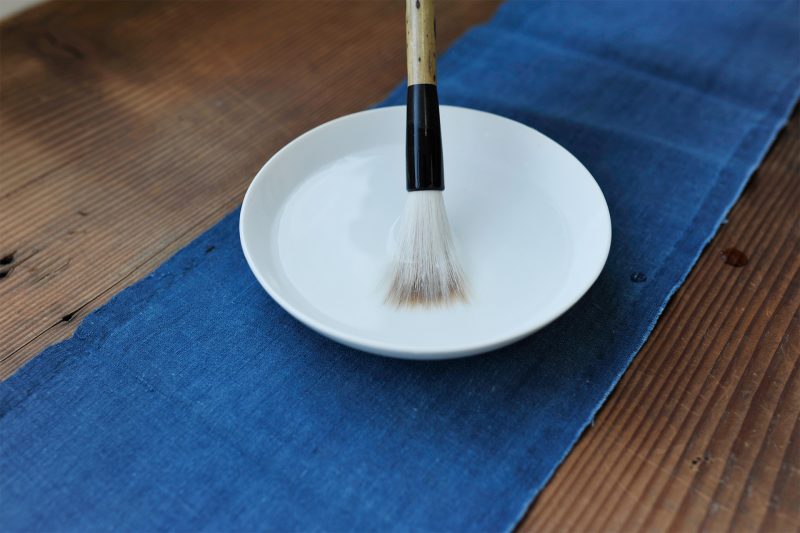
③ Use your fingers to tidy up the tip of the bristles. Additionally, you can use a brush comb to groom any damaged bristles, which will help the brush look neater after drying.
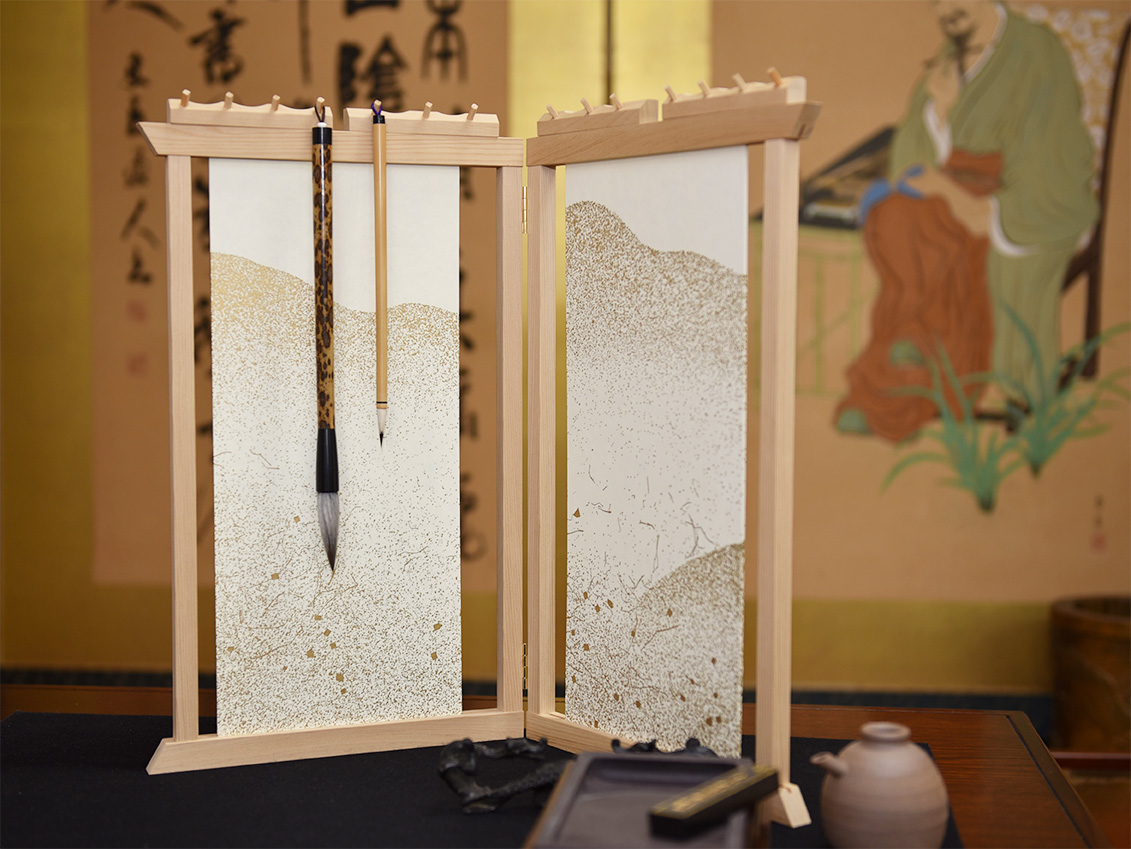
④ After finishing the washing, hang the brush on a brush hanger or similar tool to let it air dry naturally. If you start using the brush again before it’s completely dry, the bristle base will remain damp, which can lead to bristle decay. When the bristles decay, shedding and splitting are more likely to occur, and the bristles might even fall out entirely or crack, so please be cautious.
Cleaning Small Brushes
Small brushes are typically sold in a state called “gatame fude,” where the bristles are originally bound together with glue. Since only about one-third of the bristles are used for small brushes, there’s no need to wash them after use. Let’s perform maintenance without washing.
① Prepare absorbent paper such as unwanted hanshi paper or tissue paper to soak up moisture.
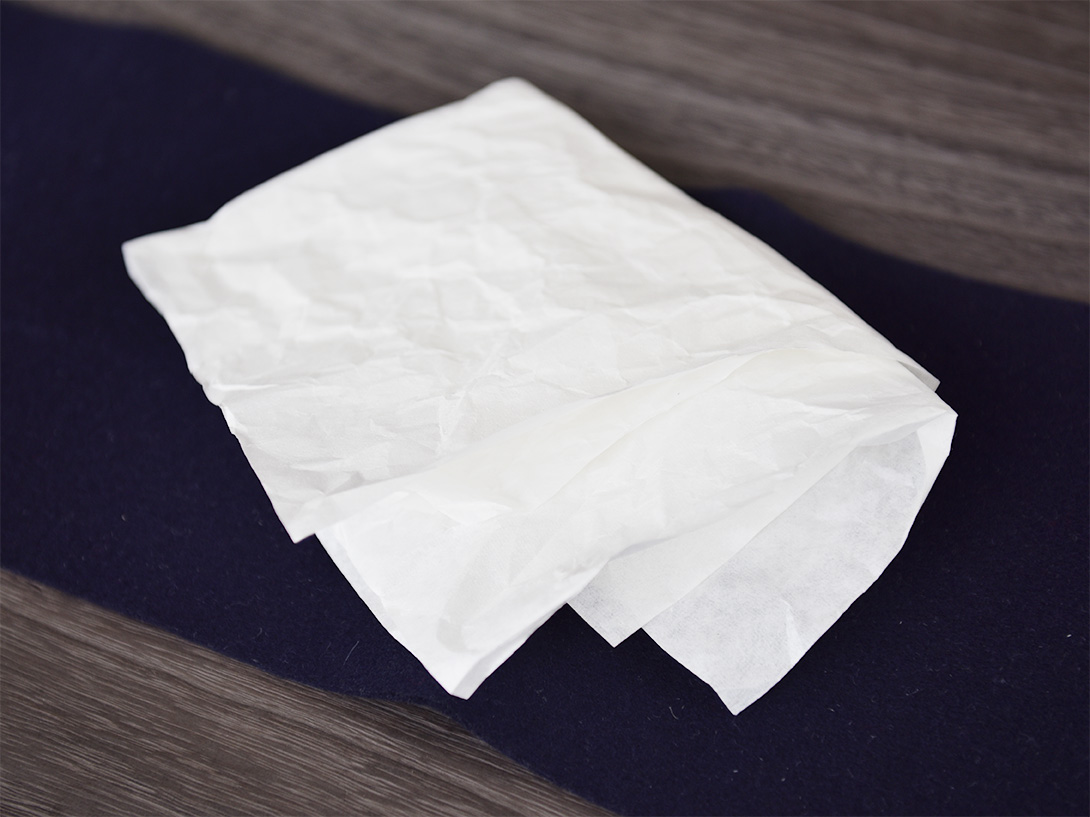
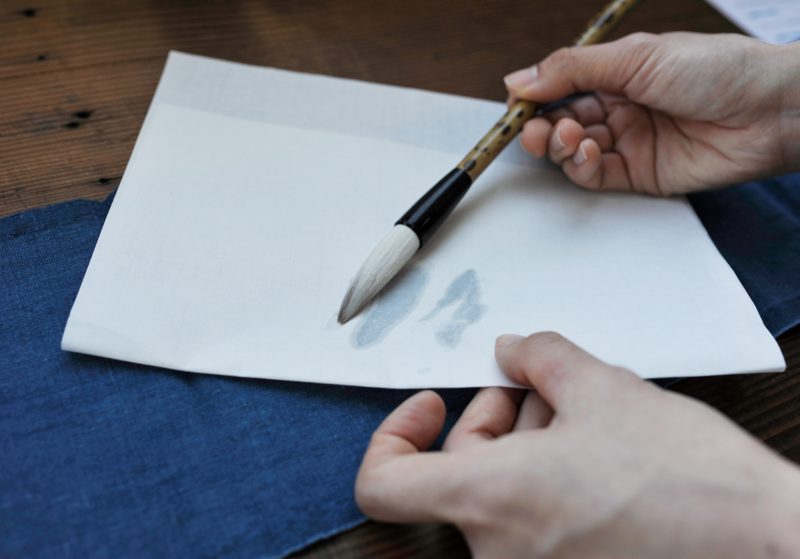
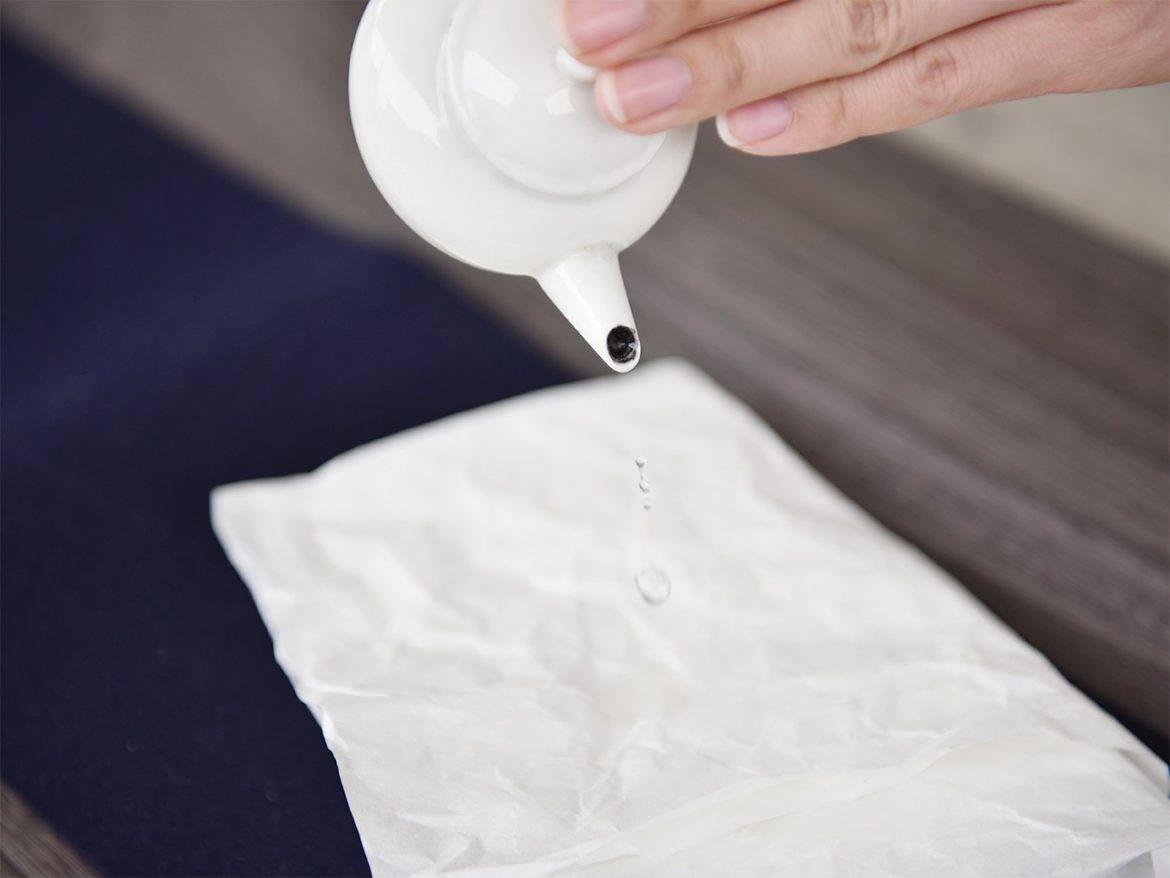
② Place a few drops of water onto the prepared paper.
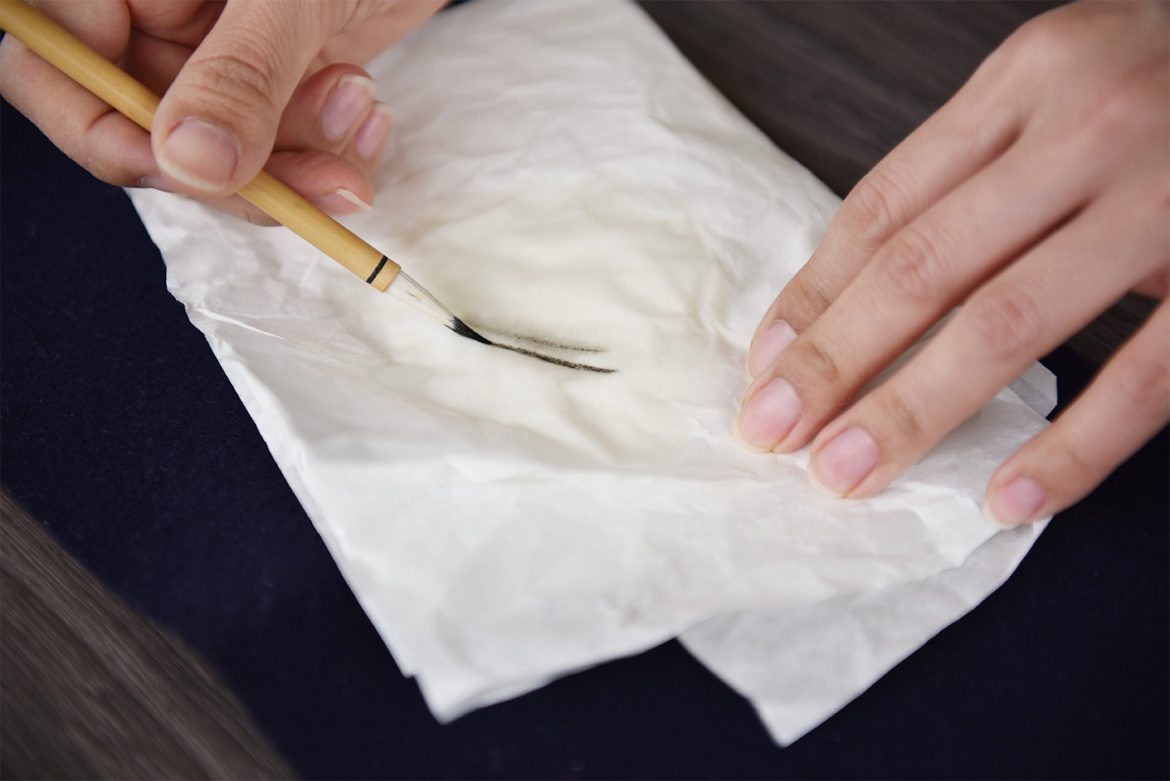
③ Lay the tip of the brush on the dampened paper from step ② and gently wipe off the ink. While rotating the brush as if adjusting the tip by resting it on the paper, slowly and carefully wipe off the ink. Ink tends to accumulate at the boundary between the bristles that have been used and the ones that are still bound together, so be cautious while wiping to prevent the bound portion from coming apart. Finish when the ink becomes faint.
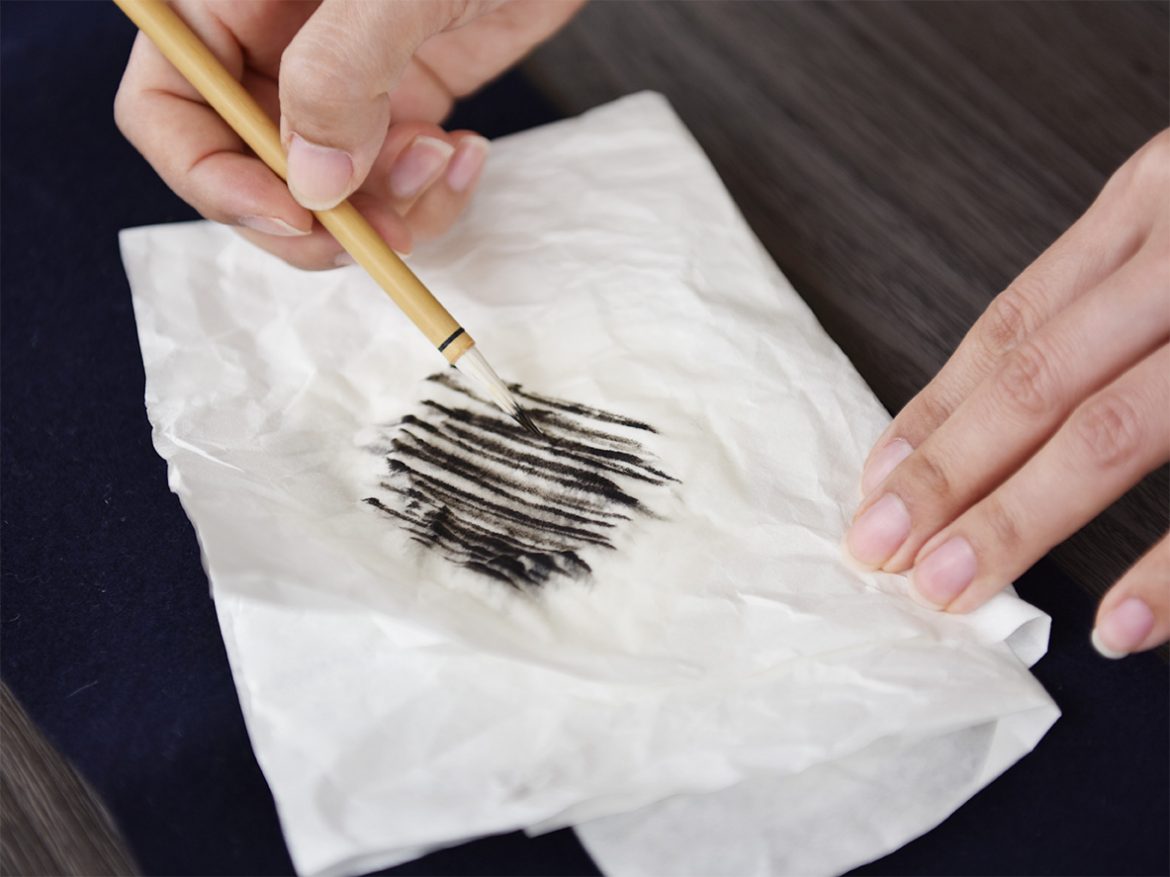
④Use your fingers to tidy up the tip of the bristles.
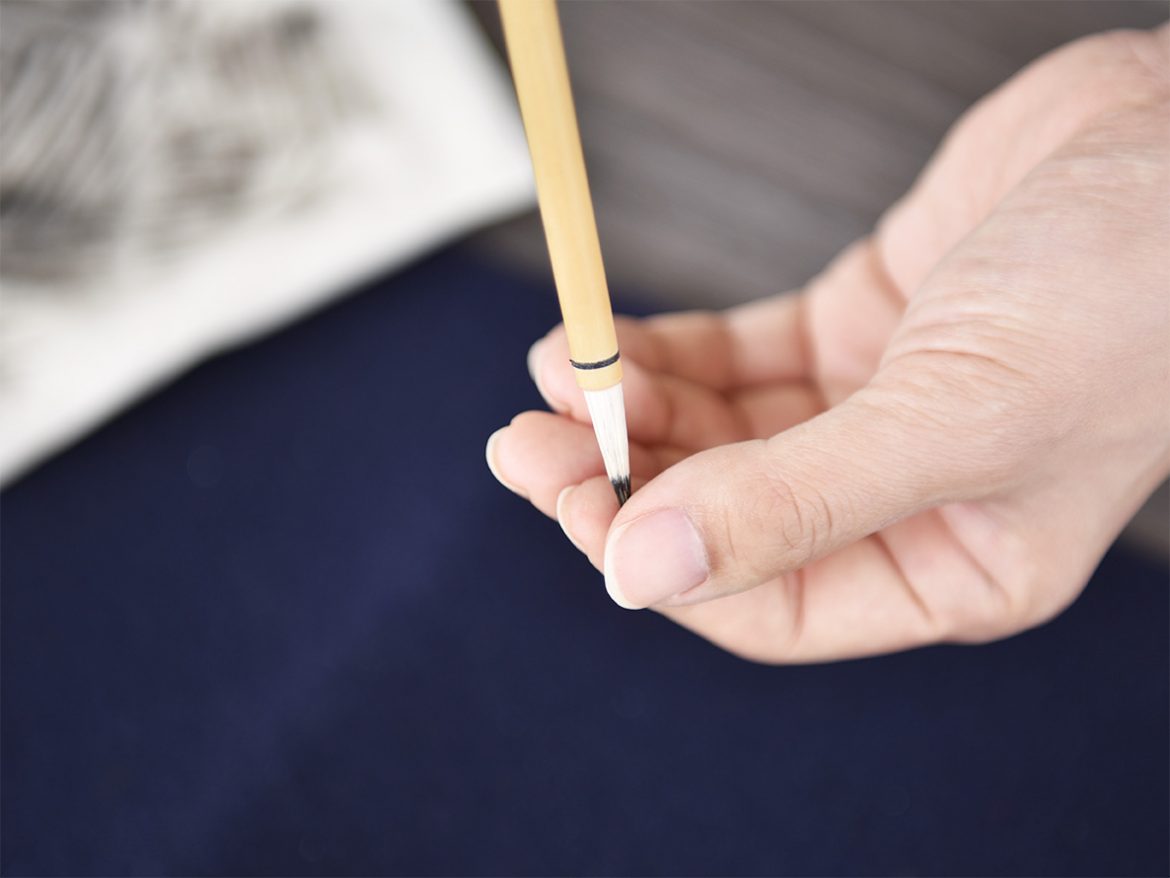
⑤After finishing the washing, hang the brush on a brush hanger or similar tool to let it air dry naturally.
If the small brush becomes too split during maintenance…
While performing repeated maintenance on small brushes, the bristles can become split all the way down to the base. When this happens, it becomes difficult to write small or thin characters using just the tip of the bristles. In such cases, it’s advisable to wash the entire bristle, and then either use it for other purposes or reapply “brush fixing glue” to solidify the bristles before use.
Points to note when handling brushes:
- After using or washing a brush, refrain from capping it as the bristles can deteriorate.
- Avoid using detergents or other cleaning agents when washing the brush.
- Handle the brush with care while washing.
- After finishing washing, ensure the brush is completely dry before using it.
- It’s advisable to allow the brush to rest intermittently during use.
To extend the lifespan of your brush, it’s a good idea to have 2 to 3 favorite brushes on hand and rotate their usage. Proper maintenance and treating your cherished brushes with care will ensure their longevity.