Raw Materials of Ink
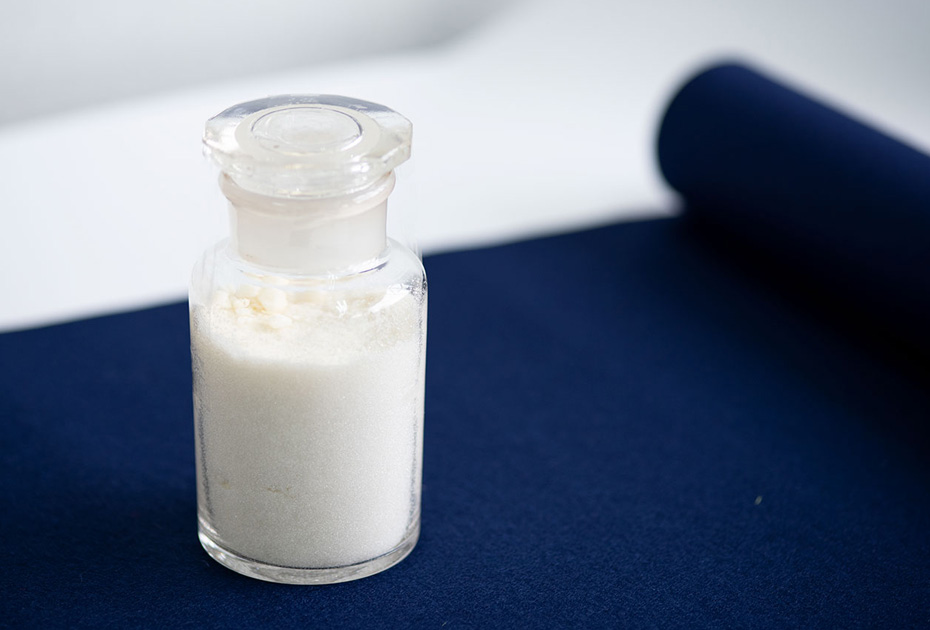
Ink is made from three main raw materials: “soot” (煤), “nikawa” (膠), and “fragrance.” First, soot and dissolved gelatin are kneaded together, and then fragrance is added. The mixture is then placed into molds and dried to create solid ink.
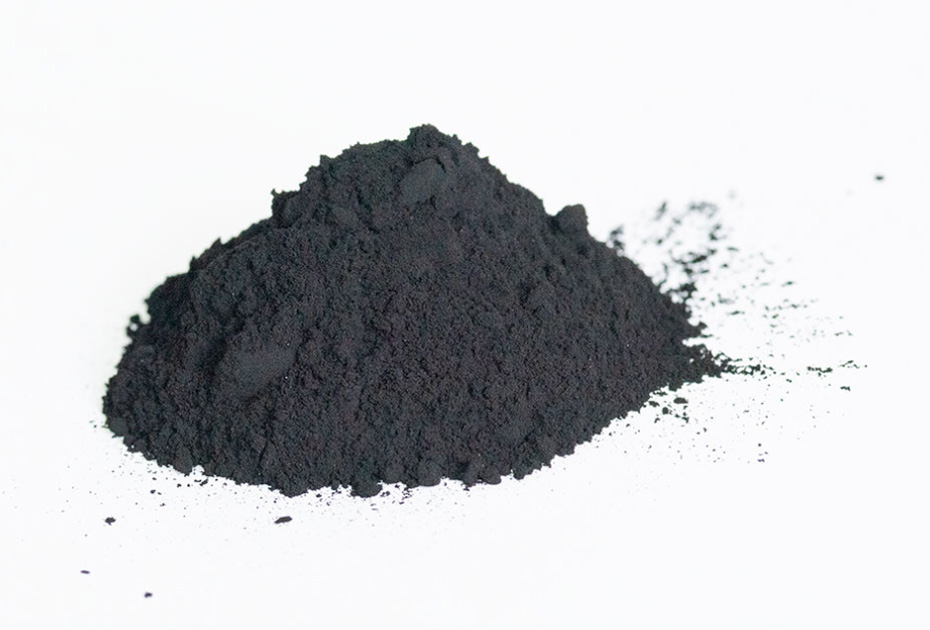
About Soot
There are three types of soot: “oil soot,” “pine soot,” and “modified carbon soot.” The ink made from each type of soot is referred to as “oil soot ink,” “pine soot ink,” and “modified carbon soot ink,” respectively.
・Oil Soot: Soot produced by burning plant oils, such as rapeseed oil.
・Pine Soot: Soot produced by burning pine branches or bark.
・Modified Carbon Soot: Soot produced by burning mineral oil, carbon black, etc.
About “nikawa” (膠)
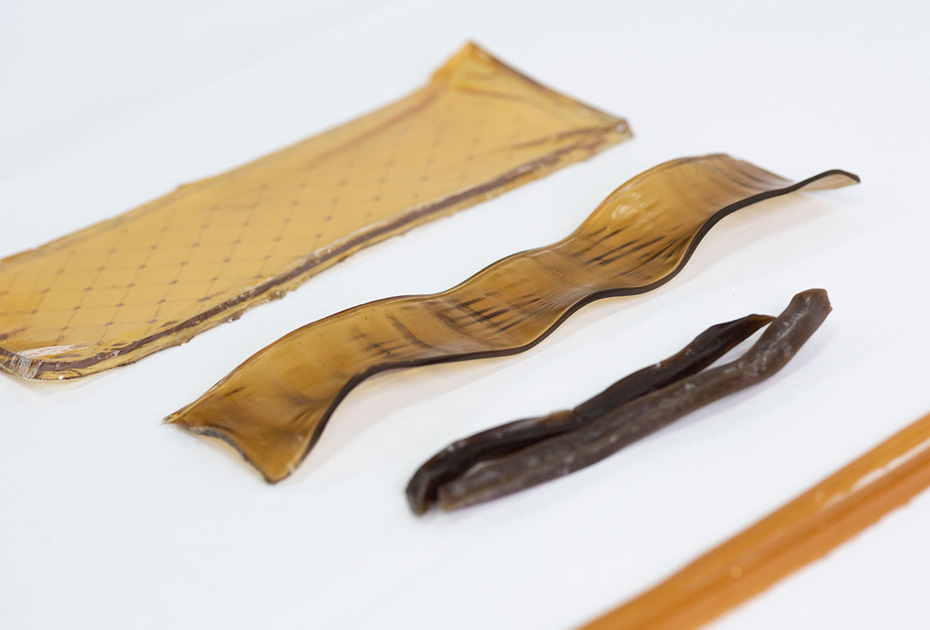
Nikawa is obtained by boiling and extracting proteins such as collagen from the skin, bones, and sinew (the intermediate tissue between the skin and flesh) of animals like cows, horses, and deer. After extraction, it is dried to form gelatin. When making ink, gelatin is melted in a water bath and used. In the ink production process, gelatin plays a role in solidifying the powdered soot, and in the ground ink, it stabilizes the soot on the paper’s surface.
About Fragrance
Fragrance is used to mask the distinctive odor of gelatin. Additionally, this fragrance has a secondary effect of calming the mind of the ink grinder.
Dragon’s blood (龍脳) and musk (麝香) are representative fragrances used for this purpose.
Types of Ink
Ink is classified into “Oil Soot Ink,” “Pine Soot Ink,” and “Modified Carbon Soot Ink” based on the type of soot used.
■Oil Soot Ink
To produce oil soot ink, vegetable oils such as rapeseed oil, sesame oil, tung oil, and camellia oil are placed in a clay vessel. A lampwick made of rush grass (いぐさ) is ignited, and the clay vessel is covered to collect the soot deposited inside. The soot in oil soot ink has fine and uniform particles. It is mixed with dissolved gelatin, kneaded together with fragrance, and then placed into molds and dried to create the ink.
While the art of making ink was introduced to Japan from China, oil soot ink is believed to be a type of ink that Japan developed first. Even today, excellent oil soot ink continues to be produced.
One of the manufacturers of oil soot ink is “Kobai-en” in Nara, which is the only place in Japan that produces oil soot ink through the traditional method of “collecting soot.”
Note: The term “modified carbon soot ink” refers to the ink made from the modified carbon soot mentioned earlier in the text.
Feature Article: “Dedicated to the Art of Ink Making – The Traditional Process at Kobai-en”>>
― Characteristics of Oil Soot Ink ―
In contrast to pine soot ink, oil soot ink exhibits a glossy appearance when ground. In its concentrated form, it appears black, but in its diluted form, it takes on a reddish-brown hue.
Oil soot ink is nearly free from impurities, and its particles are fine and uniform, making it well-suited for producing ink of normal to concentrated densities. The fine particles result in a smooth texture on the inkstone, and as the quality of the oil soot ink improves, this glossy appearance becomes more pronounced.
Regarding ink color, the following characteristics are observed: [further details to be provided below].
| High-Quality Oil Soot Ink | Poor-Quality Oil Soot Ink | |
|---|---|---|
| Concentrated Ink | A glossy and deep lacquer black with a sense of depth. | Lacks the deep black luster, exhibiting a reddish or whitish brown ink color. |
| Diluted Ink |
A light brown with hints of purple or blue tones. It provides a fine gradation and three-dimensional effect. (The color may vary depending on the type of vegetable oil used.) |
Has a coarse texture with no three-dimensional effect. |
■About Pine Soot Ink
There are two types of pine soot ink: “Ikimatsu Pine Soot Ink” and “Ochimatsu Pine Soot Ink.” “Ikimatsu Pine Soot Ink” is made from the soot produced by scraping the bark of living pine trees, while “Ochimatsu Pine Soot Ink” is made from the soot produced by burning dried pine wood, which contains more pine resin. To collect the soot for pine soot ink, the part of the pine tree that exudes resin is cut into small pieces, dried, and then burned inside a room. The soot that settles on the walls and ceiling is collected for use. This soot is mixed with dissolved gelatin, kneaded together with fragrance, placed into molds, and dried to create the ink. This manufacturing process is the oldest method of ink production, originating from ancient China and later transmitted to Japan.
Currently, with oil soot ink becoming the mainstream and the scarcity of high-quality pine, pine soot ink is treated as a precious commodity.
― Characteristics of Pine Soot Ink ―
In contrast to oil soot ink, pine soot ink lacks a glossy appearance when ground and is said to transition from black to blue as it ages. The uneven particles of soot beautifully depict delicate gradations in diluted ink. In concentrated ink, it exhibits a subdued luster, while in diluted ink, it offers a transparent and exquisite hue. Pine soot ink is considered to have excellent effects when used as a background in the calligraphy of ancient brushes and ink paintings.
■Modified Carbon Soot Ink
Modified carbon soot ink, also known as Western ink, is made from materials such as mineral oil and carbon black. It is commonly used in practical ink and affordable products. One of its characteristics is that it “darkens quickly” compared to pine soot ink and oil soot ink. However, it may be said that it lacks the natural charm of ink, which “shines in seven colors.”
While modified carbon soot ink may be considered inferior to pine soot ink and oil soot ink, using it is recommended for preserving the longevity of brushes and inkstones.
Popular Oil Soot Ink at Shoyu Online
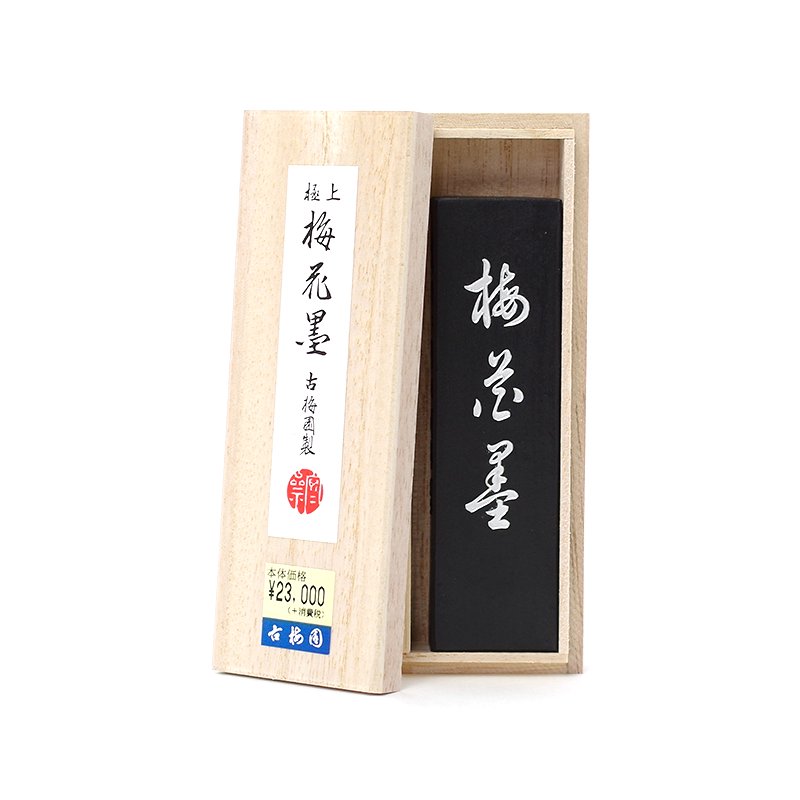
1. 梅花墨 大 3.0丁型(古梅園)
This is the finest oil soot ink made with rapeseed oil, featuring the finest particles. It has a substantial weight and appears pure black in concentrated form, while in diluted form, it contains a hint of light purple. It has excellent flow and is perfect for Chinese characters and kana works.
View Product Page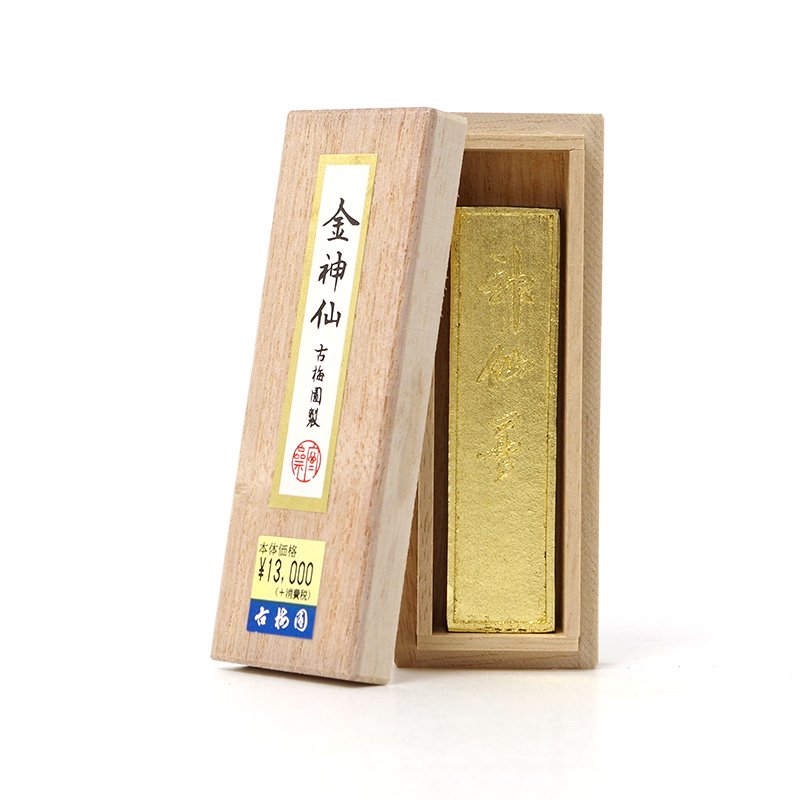
2. 金神仙 1.5丁型(古梅園)
This is the finest rapeseed oil soot ink. In its concentrated form, it appears glossy and pure black, while in diluted form, it takes on a black hue with brown tones. It is suitable for Chinese character works, kana calligraphy, and sutra copying.
View Product Page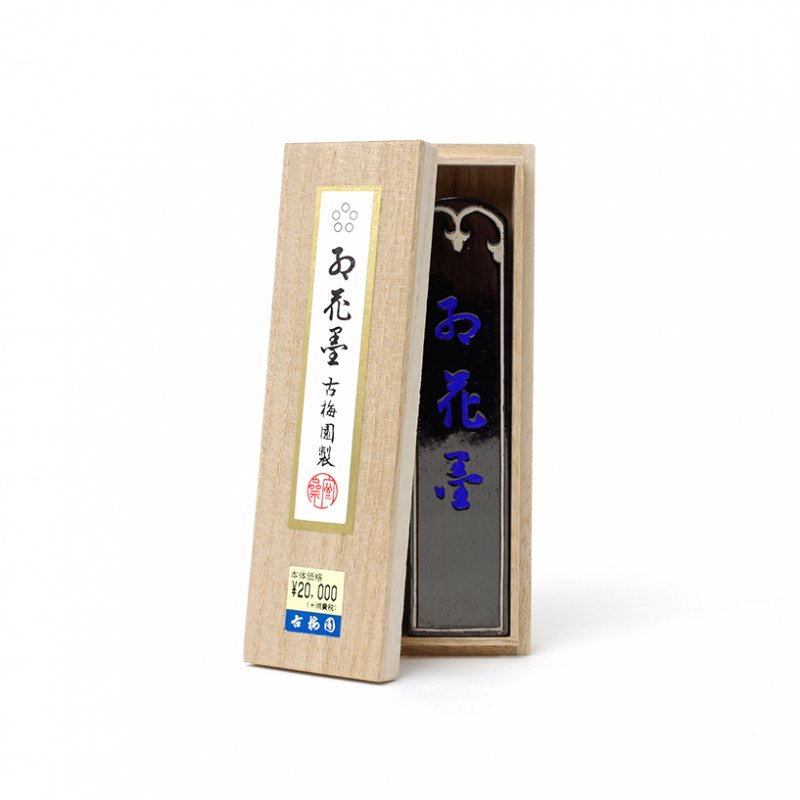
3. 五星 紅花墨 5.0丁型(古梅園)
This is oil soot ink made with rapeseed oil, known for its excellent flow. In its concentrated form, it exhibits a beautiful black color resembling ink, while in diluted form, it appears as a grayish hue.
View Product PagePopular Blue Ink and Pine Soot Ink at Shoyu Online
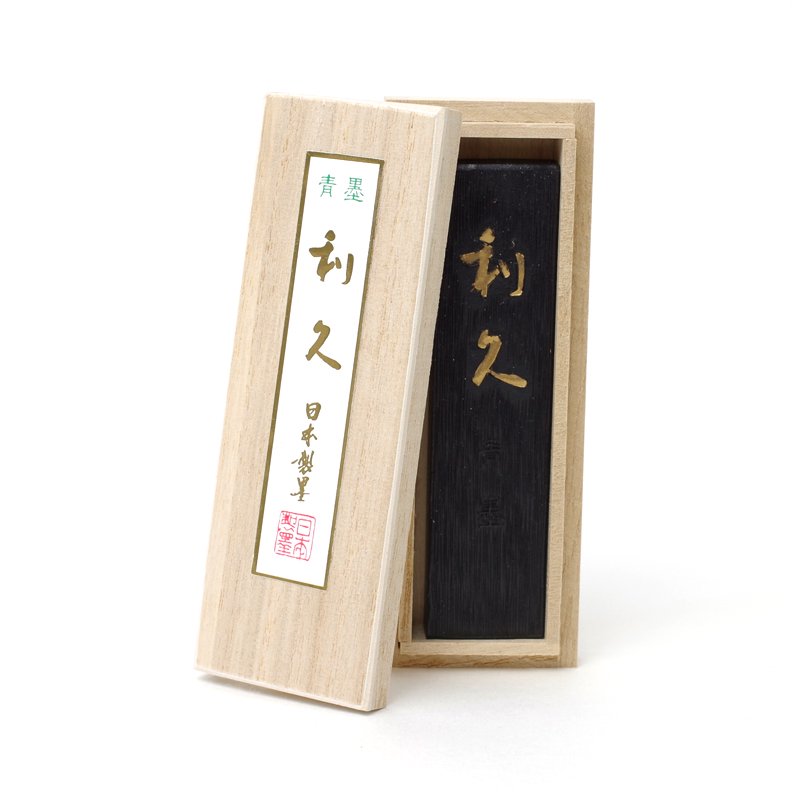
1. 利久 1.5丁型(日本製墨)
This pine soot ink is created by blending vegetable-based indigo with our other ink, resulting in a pine soot ink with a more pronounced blue tint. It is a premium concentrated blue ink that has been carefully adjusted to suit the preferences of calligraphers and artists.
View Product Page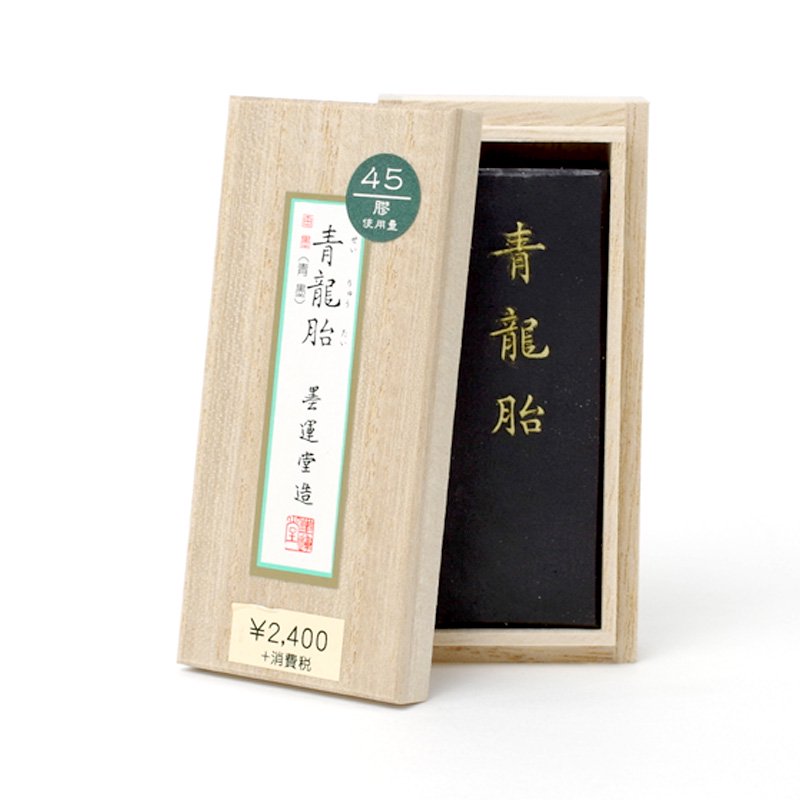
2. 青龍胎 1.5丁型(墨運堂)
It allows for layering without shining, offering the ability to freely express gradations and create artworks with depth and a sense of distance in the ink color. It is recommended for practicing e-tegami (Japanese picture letters) and sumi-e (ink wash painting).
View Product Page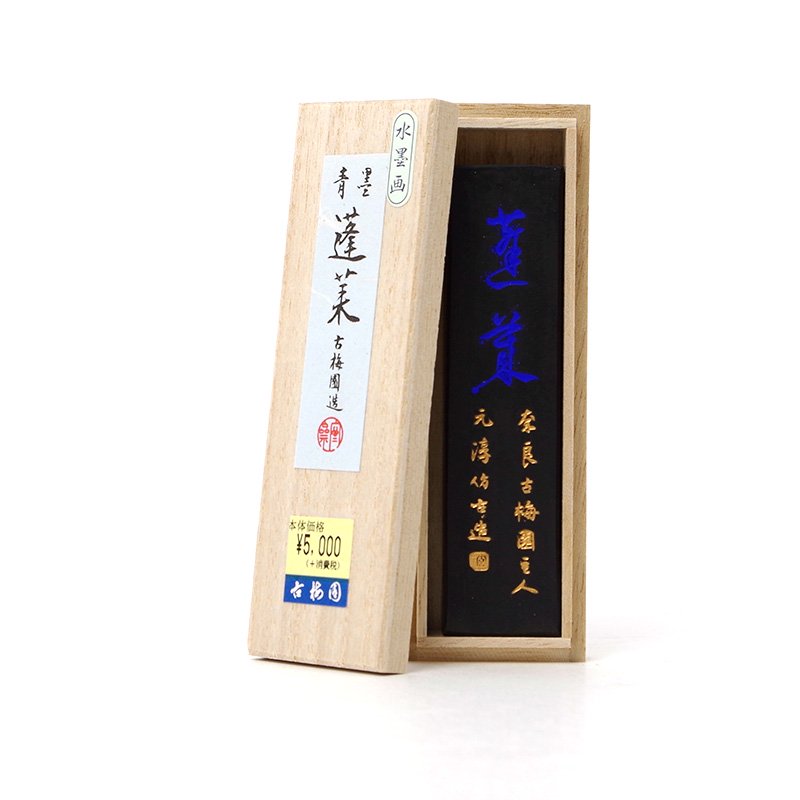
3. 蓬莱 2.0丁型(古梅園)
Oil soot ink, developed through over 400 years of ink making, is used for blue ink and made solely from soot. In diluted form, it leans towards a grayish hue with a touch of blue, evoking a sense of weight and suitable for sumi-e (ink wash painting), haiga (haiku painting), and other art styles.
View Product PageSummary
We have introduced the raw materials and types of ink. Ink is made from three main raw materials: “soot” (煤), “Nikawa” (膠), and “fragrance.” It is classified into “Oil Soot Ink,” “Pine Soot Ink,” and “Modified Carbon Soot Ink” based on the type of soot used. Each type of ink has its own characteristics, so please choose according to the artwork you want to create.
Check out the “Ink” products available at Shoyu Online here»